A disorganized garage isn’t just an eyesore, it’s wasted potential. When automotive tools, parts, and seasonal gear pile up without a system, projects take longer, items get damaged, and valuable floor space disappears. Proper automotive storage solutions transform a cluttered workshop into a functional space where everything has a home and you can actually find what you need. Whether you’re storing a few hand tools or running a full home shop, the right combination of wall-mounted racks, overhead systems, and dedicated cabinets makes all the difference. This guide walks through proven storage strategies that work for real garages, not magazine spreads.
Table of Contents
ToggleKey Takeaways
- Proper automotive storage solutions protect tools from damage, reduce safety hazards, and save DIYers 15-20 minutes per project hunting for misplaced items.
- Wall-mounted systems like slatwall panels and rail systems maximize vertical space without sacrificing floor area, with weight capacities ranging from 50 to over 100 pounds per linear foot.
- Ceiling-mounted racks reclaim underutilized overhead space for seasonal storage, but installation requires proper anchoring to ceiling joists with lag bolts, never drywall anchors alone.
- Metal cabinets with locking doors and adjustable shelves are essential for storing automotive parts and hazardous materials, while color-coded bins speed identification during projects.
- DIY storage projects like lumber racks, magnetic fastener strips, and French cleat systems can be completed in a weekend for under $50 and provide flexible solutions tailored to your garage layout.
Why Proper Automotive Storage Matters for Your Home
A well-organized garage protects your investment in tools and equipment while reclaiming usable square footage. Tools left on workbenches or floors collect dust, rust, and damage, a $200 impact wrench won’t last long under a leaky roof tile or buried under paint cans.
Beyond protecting gear, proper storage reduces safety hazards. Tripping over extension cords, stepping on loose fasteners, or having chemicals stored at kid-height creates genuine risk. Most homeowner’s insurance policies don’t cover negligent storage of flammable materials, and local fire codes in many jurisdictions require flammable liquids to be stored in approved metal cabinets away from ignition sources.
There’s also the time factor. The average DIYer wastes 15-20 minutes per project hunting for tools. Over a year of weekend projects, that’s hours lost to disorganization. A functioning storage system pays for itself in reclaimed time, reduced tool replacement costs, and the ability to park a vehicle in the garage again, which can matter for resale value in markets where covered parking is expected.
Wall-Mounted Storage Systems for Tools and Equipment
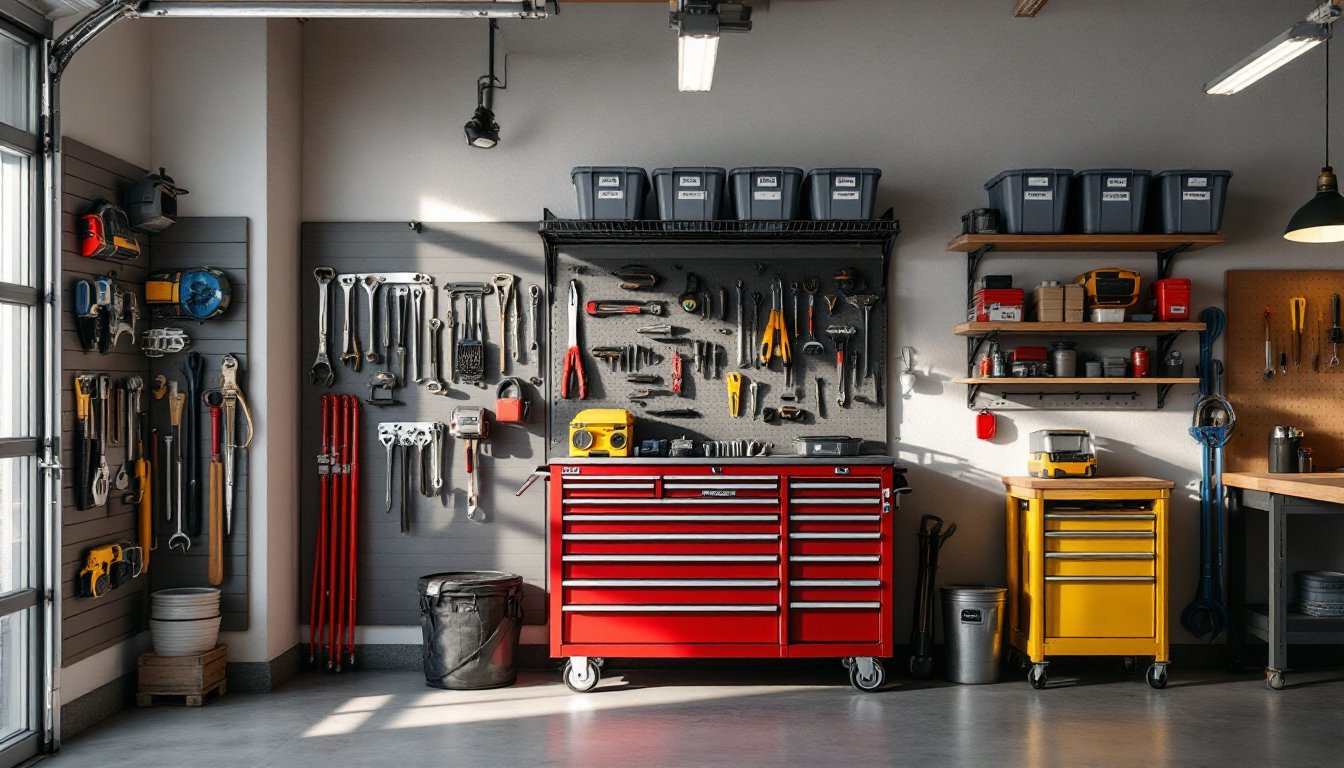
Wall-mounted systems maximize vertical space without sacrificing floor area. Three main types dominate garage setups: pegboard, slatwall panels, and rail systems.
Pegboard remains the budget-friendly standard. A 4×8-foot sheet of ¼-inch tempered hardboard runs $20-30 and mounts directly to wall studs with furring strips behind for hook clearance. Use ½-inch spacers to create the necessary gap. Pegboard works well for hand tools but struggles with heavy items, don’t trust it for full toolboxes or air compressors.
Slatwall panels offer more versatility and weight capacity. These PVC or metal panels feature horizontal grooves that accept specialized hooks, baskets, and shelves rated for 50-75 pounds per bracket. Installation requires locating studs (studs are typically spaced 16 or 24 inches on center) and securing panels with 3-inch deck screws. The upfront cost is higher, $6-10 per square foot, but the flexibility justifies it for serious workshops.
Rail systems provide the highest weight capacity, with some models supporting 100+ pounds per linear foot. These horizontal tracks mount directly to studs and accept sliding hooks that you can reposition without tools. They’re ideal for heavier items like leaf blowers, pressure washers, or multiple bikes.
Regardless of system type, always mount to studs for load-bearing applications. Drywall anchors work for lightweight items (under 10 pounds), but anything heavier needs solid wood backing. Use a stud finder and mark locations with painter’s tape before drilling.
Overhead Garage Storage for Seasonal Items
Ceiling-mounted racks reclaim the most underutilized space in any garage. These systems work best for seasonal items, winter tires, holiday decorations, camping gear, that you access a few times per year.
Two main types exist: ceiling-mounted shelves and motorized lift platforms. Fixed shelves are simpler and cheaper, typically consisting of powder-coated steel frames that bolt directly to ceiling joists. Most support 300-600 pounds when properly installed across multiple joists. Standard dimensions are 4×8 feet or 4×4 feet, suspended 12-20 inches below the ceiling to leave clearance for garage door tracks and openers.
Installation requires hitting ceiling joists, typically 16 or 24 inches on center for garage construction. Use a stud finder or tap test to locate them. Lag bolts (at least 3 inches long into solid wood) are non-negotiable: expansion bolts into drywall won’t cut it. If your garage has a truss roof system, consult the truss specs or a structural engineer before adding significant weight. Bottom chord loading limits vary.
For frequently accessed overhead storage, motorized platforms make sense even though the higher cost ($400-800). These crank or electric-powered systems lower items to working height, eliminating ladder work. They’re particularly useful for those with mobility concerns or heavy seasonal loads.
Safety note: Never exceed rated weight capacity, and distribute loads evenly. A 300-pound rating means total weight including the bin, not just contents. Garage ceiling structures aren’t designed like floor joists, overloading can lead to catastrophic failure.
Cabinet and Shelving Solutions for Auto Parts
Automotive parts storage solutions demand organization that prevents confusion and damage. A drawer full of mixed fasteners wastes time: spilled brake fluid eats through shelving.
Metal cabinets dominate serious shops for good reason. Steel construction with powder-coat finish resists chemical spills, and locking doors secure expensive parts and hazardous materials. Look for units with adjustable shelves rated for at least 50 pounds per shelf. Full-depth cabinets (24 inches) accommodate larger items like alternators or brake rotors better than shallow 12-inch models.
For smaller fasteners and components, parts organizer bins with removable drawers make sorting effortless. Clear drawer fronts let you see contents at a glance. Wall-mounted units save bench space. Label everything, your memory won’t serve you six months from now when hunting a specific metric bolt.
Heavy-duty wire shelving offers a middle ground between cost and capability. Chrome or powder-coated steel racks handle 250-350 pounds per shelf when weight is evenly distributed and units are anchored to walls. The open design prevents dust accumulation and makes items visible. Standard 48-inch or 72-inch widths fit most garage walls, with adjustable heights to accommodate everything from oil bottles to transmission jacks.
Many DIYers overlook the importance of segregating plastic storage bins by part type and vehicle project. Color-coded bins (blue for electrical, red for brake components, yellow for fluids) speed identification when you’re three bolts into a job.
Flammable liquids need special consideration. Check local codes, many jurisdictions require approved metal cabinets for gasoline, solvents, and paint products. These aren’t optional in commercial settings and increasingly apply to residential garages with business use.
Mobile Tool Chests and Workbench Organization
A rolling tool chest keeps frequently used tools accessible without cluttering the workbench. These range from $150 budget models to $2,000+ professional units with ball-bearing slides and power tool storage.
For home mechanics, a 26-inch or 41-inch chest with a matching cabinet base provides sufficient storage without overwhelming a single-car garage. Look for ball-bearing drawer slides, cheap friction slides bind under load and fail quickly. Full-extension slides let you access items at the back without removing half the drawer.
Drawer organization matters as much as the chest itself. Foam tool organizers (custom-cut or pre-made kits) prevent tools from shifting and create visual inventory, empty spots show what’s missing before you button up a project. Drawer liners protect finish and reduce noise.
Workbench organization separates productive workshops from chaotic ones. A dedicated pegboard backsplash mounted to the wall behind the bench keeps hand tools within arm’s reach. Magnetic tool strips work brilliantly for frequently grabbed items like screwdrivers and pliers.
For the bench surface itself, resist the urge to make it a permanent storage shelf. That defeats the purpose of having a work surface. Instead, use under-bench drawers or cabinets for items that don’t warrant wall space. A sustainable storage approach includes repurposing old file cabinets or dresser drawers as under-bench units.
Bench height matters for ergonomics. Most commercial benches sit 34-36 inches high, which works for average-height users doing light assembly. For heavy work involving a vise or serious pounding, drop it to 30-32 inches to get your body weight over the work.
Add task lighting directly over the bench, a simple LED shop light (4 feet, 4000+ lumens) eliminates shadows and eye strain. Wall power receptacles should be GFCI-protected per NEC codes for garage locations.
DIY Automotive Storage Projects You Can Build This Weekend
Custom storage beats off-the-shelf solutions when you have odd-sized items or specific workflow needs. These three projects require basic tools and deliver immediate results.
Wall-Mounted Lumber Rack
Building a simple 2×4 lumber rack takes 2-3 hours and costs under $30. Cut four 24-inch pieces of 2×4 as brackets, angling the top edge at 45 degrees. Mount them to studs using 3-inch lag screws, spacing them 24 inches apart vertically. This holds plywood sheets, dimensional lumber, and long stock vertically against the wall, freeing floor space.
Rolling Cart from Reclaimed Materials
Repurposing old furniture into auto storage solutions saves money and landfill space. An old kitchen cart or filing cabinet becomes a mobile parts station with 3-inch locking casters (about $20 for four). Drill pilot holes through the base, bolt casters from underneath with ¼-inch bolts, and add a scrap plywood top if needed. Spray paint with rust-resistant enamel for durability. Similar woodworking project plans demonstrate techniques for building custom carts from scratch.
Magnetic Fastener Strips
Sticking magnetic tool holders along the side of a metal toolbox or cabinet creates instant storage for wrenches, sockets, and drill bits. Adhesive-backed magnetic strips ($15 for a 2-foot roll) mount in seconds. This keeps small items visible and prevents the junk drawer effect.
French Cleat System
This versatile wall system lets you rearrange storage without new holes. Rip a 1×6 board lengthwise at 45 degrees (a table saw works best: a circular saw with a guide works). Mount one half to wall studs with the angle facing up, attach the other half to tool holders or shelves with the angle facing down. Components hang securely but lift off for reconfiguration. Discussions on organization tips often highlight French cleats for kitchen and garage use.
Materials needed for basic cleat setup:
- One 8-foot 1×6 pine board ($8-12)
- 2½-inch wood screws for mounting to studs
- Scrap plywood for shelf/holder bases
- Stud finder and level
Safety reminder: Wear safety glasses when operating saws, and hearing protection for prolonged cutting. Check for electrical wiring or plumbing before drilling into walls, a wire detector saves painful surprises.
These projects adapt easily to different garage sizes and vehicle storage solutions needs, whether you’re organizing a single motorcycle or a full restoration shop. The key is building for your actual usage patterns rather than theoretical perfection.
Conclusion
Effective automotive storage isn’t about buying the most expensive system, it’s about matching solutions to how you actually work. Wall-mounted systems handle everyday tools, overhead racks clear seasonal clutter, and proper cabinets protect valuable parts. Start with the storage type that solves your biggest pain point, whether that’s lost tools, wasted floor space, or safety concerns. Most importantly, build in flexibility. Needs change as projects evolve, and the best storage systems adapt rather than lock you into one configuration.