A cluttered office isn’t just an eyesore, it’s a productivity killer. Papers pile up, supplies vanish into desk drawers, and finding what you need becomes a daily scavenger hunt. Office storage containers offer a straightforward fix. They corral chaos, make the most of vertical space, and turn a jumbled workspace into a functional command center. Whether you’re working from a spare bedroom or outfitting a home office, the right containers keep essentials within reach and distractions out of sight.
Table of Contents
ToggleKey Takeaways
- Office storage containers eliminate workplace clutter and boost productivity by reducing the average of 4.3 hours per week employees spend searching for supplies and documents.
- Desktop organizers, drawer dividers, and stackable bins address different storage needs—choose clear plastic for visibility, opaque bins for aesthetics, and modular containers for flexibility as your workspace evolves.
- Audit your actual inventory, measure your space precisely, and select materials based on function: clear plastic for infrequent items, metal mesh for electronics, and fabric bins for lightweight supplies.
- Creative DIY projects like pegboard systems, PVC pipe organizers, and repurposed mason jars offer cost-effective alternatives to commercial office storage containers.
- Implement labeling, a ‘one in, one out’ rule, and quarterly purges to maintain an organized system that adapts to changing project needs and prevents container overflow.
Why Office Storage Containers Are Essential for Productivity
Workspace clutter has a measurable impact on focus and efficiency. Studies show that visual disorder competes for attention, slowing task completion and increasing stress. Storage containers create designated homes for supplies, reducing the mental load of remembering where things are.
A well-organized office also saves time. The average worker spends about 4.3 hours per week searching for papers, files, or office supplies. Containers eliminate that hunt by grouping similar items, pens with pens, cables with cables, invoices in labeled bins.
Beyond function, storage containers protect materials. Clear plastic bins shield documents from dust and spills. Desktop organizers prevent pens from rolling off the desk and vanishing into the void. Properly stored supplies last longer, which means fewer replacement runs to the office supply store.
Finally, containers support scalability. As projects grow or shift, modular storage adapts. Add another stackable bin when inventory increases. Swap out drawer dividers when the workflow changes. Office storage isn’t static: it evolves with the work.
Types of Office Storage Containers for Every Need
Desktop Organizers and Small Bins
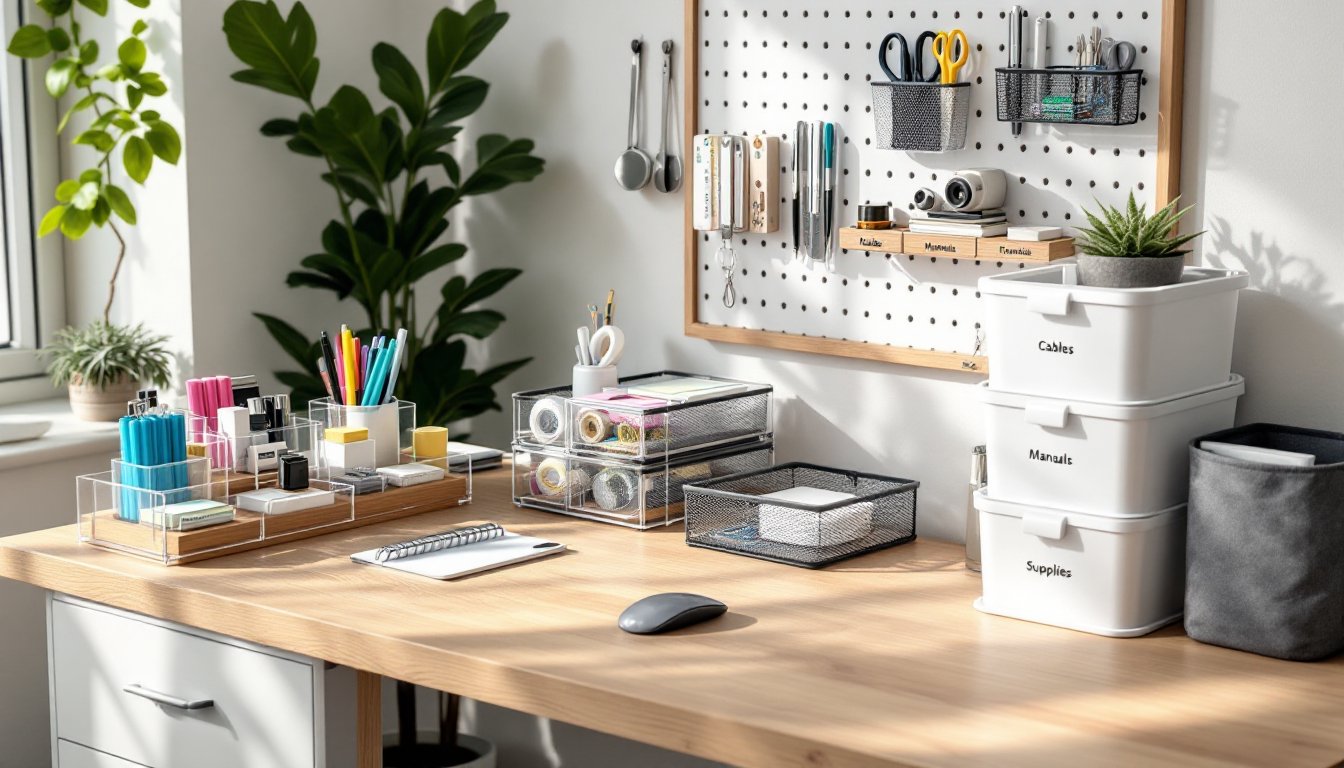
Desktop organizers handle high-frequency items, the things you grab a dozen times a day. Look for multi-compartment trays with sections for pens, sticky notes, paper clips, and charging cables. Bamboo organizers are durable and easy to clean: mesh metal versions offer better visibility if you’re the “out of sight, out of mind” type.
Small clear bins work well for odds and ends like USB drives, spare batteries, and business cards. Choose containers with lids if dust or curious pets are concerns. Bins sized around 4 x 6 inches fit neatly on most desks without hogging real estate.
Label makers are your friend here. Even if you’re the only one using the space, labels speed up the “where did I put that?” reflex. Stick to simple, bold text, no need for calligraphy.
Drawer Dividers and Compartment Systems
Drawers without dividers become junk magnets. Adjustable dividers made from plastic or bamboo transform a chaotic drawer into a grid of purpose. They’re especially useful for categorizing supplies by function: writing tools, adhesives, electronics.
For filing drawers, hanging file frames and letter-size bins keep folders upright and accessible. Consider color-coded tabs, red for urgent, blue for client files, green for financials. It’s a low-tech hack, but it works.
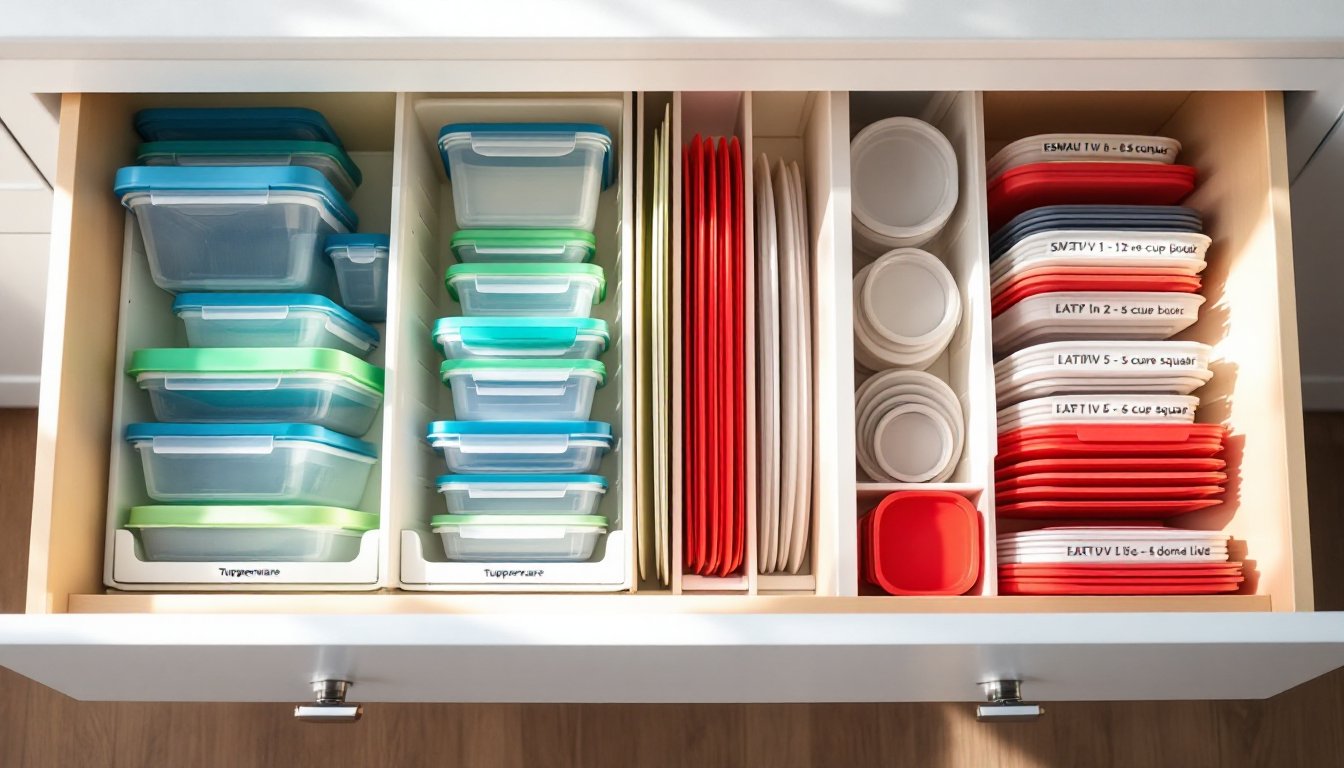
Deep drawers benefit from plastic storage bins that lift out for quick access. Think of them as portable cubbies: one for chargers, another for packaging supplies, a third for manuals. When the bins have handles, reorganizing becomes a grab-and-go job.
How to Choose the Right Storage Containers for Your Office
Start by auditing what you actually have. Empty every drawer, shelf, and corner. Group items by category, writing instruments, cables, paper, tools. Measure the volume of each category. This isn’t guesswork: it’s math.
Next, measure your space. Note desk drawer dimensions, shelf heights, and clearance around the workspace. A container that’s too tall won’t fit under a shelf. One that’s too wide blocks access to other supplies. Standard desk drawers are typically around 12–14 inches deep, so plan accordingly.
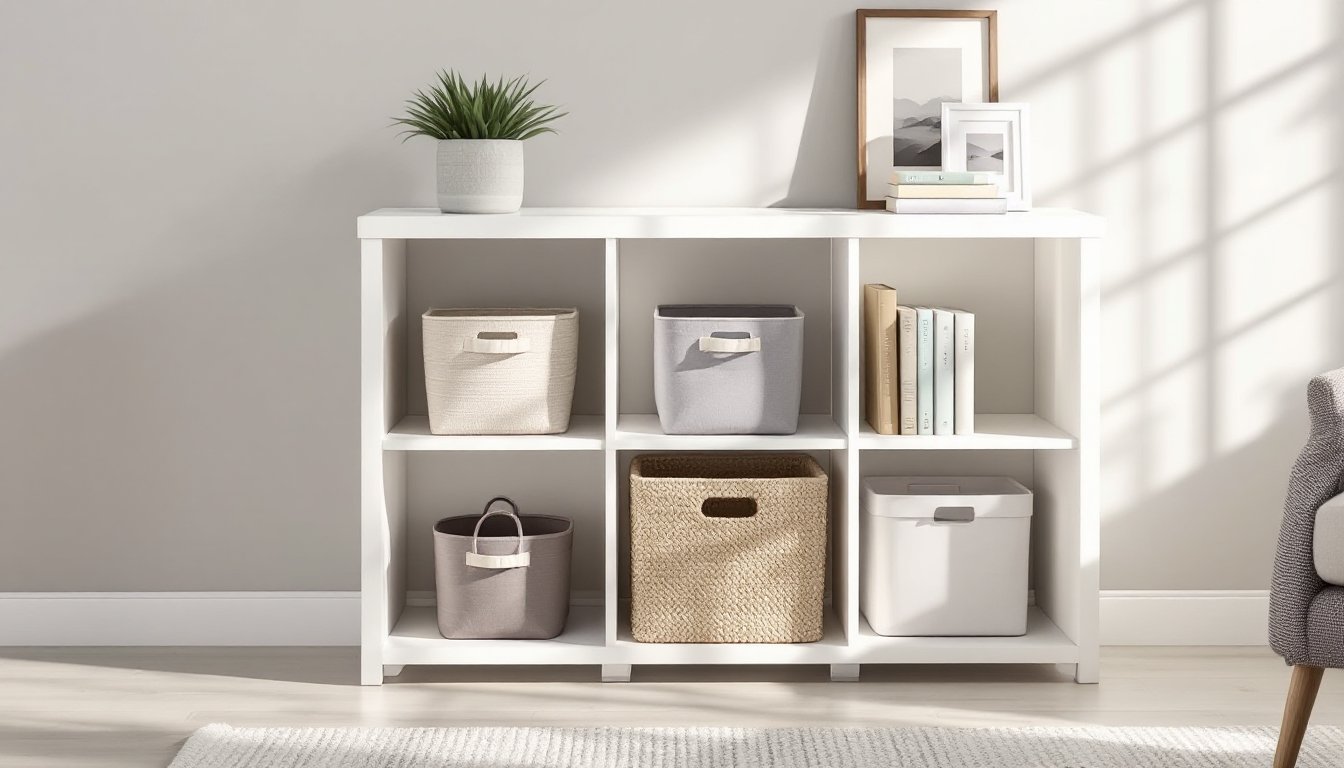
Material matters. Clear plastic lets you see contents at a glance, which is ideal for infrequently used items. Opaque bins hide visual clutter but require labels. Metal mesh organizers offer ventilation for electronics. Fabric bins work for lightweight supplies but aren’t moisture-resistant.
Consider stackable storage if vertical space is available. Stackable containers maximize shelf real estate and can be reconfigured as needs change. Just ensure the lids latch securely, nobody wants a desktop avalanche.
For homes with multiple office users, uniform container sizes simplify restocking and swapping. If everyone uses the same bin dimensions, spare containers become interchangeable. It’s the Lego principle: standardization breeds flexibility.
Creative DIY Office Storage Container Projects
Building custom storage doesn’t require a woodshop. Start with repurposed materials. Mason jars mounted under a shelf create gravity-defed supply holders, fill them with pens, scissors, or paintbrushes. Secure jars with hose clamps or 3D-printed brackets. This setup works best for items you use daily.
PVC pipe sections make excellent desktop organizers. Cut 3-inch diameter PVC into 4–6 inch lengths, sand the edges smooth, and arrange them in a grid on a small plywood base. Glue with PVC cement. Paint if desired, though primer is essential for adhesion on smooth plastic. Each pipe holds rolled documents, markers, or rulers upright.
For drawer dividers, try foamcore board. Measure the drawer interior, then cut foamcore strips to create a custom grid. Slot pieces together with perpendicular cuts halfway through each strip. No glue needed, and the dividers adjust easily. This method shines for organizing small hardware, craft supplies, or electronics accessories.
Wall-mounted pegboard remains a DIY classic. Install a 24 x 48 inch pegboard panel above the desk using 1 x 2 inch furring strips as spacers so hooks have clearance. Add bins, hooks, and shelves as needed. Pegboard adapts instantly, no drilling new holes when workflows shift. Effective storage solutions from expert organizing sources often include modular systems like this.
Old filing cabinets get new life with a coat of paint and updated drawer pulls. Sand lightly, apply a bonding primer (essential for glossy metal), then finish with satin or semi-gloss latex. Line drawers with contact paper or fabric for a polished look. Suddenly, that curbside rescue becomes statement storage.
Organizing Your Office: Best Practices and Tips
Group items by frequency of use. Daily essentials live within arm’s reach, desktop organizers or the top desk drawer. Weekly items go in lower drawers or nearby shelves. Rarely used supplies can migrate to closets or storage deals found on clearance bins.
Carry out a “one in, one out” rule. When a new pen arrives, toss a dried-up one. This prevents container overflow and keeps inventory lean. It’s maintenance, not perfection.
Label everything, even if it seems obvious. Six months from now, “miscellaneous cables” won’t cut it. Be specific: “USB-C cables,” “HDMI 6 ft,” “phone chargers.” Use a label maker or waterproof markers on masking tape.
Schedule quarterly purges. Set a calendar reminder to empty containers, discard broken items, and reassess what’s actually needed. Offices accumulate debris, orphaned pen caps, expired sticky notes, ancient batteries. A quarterly cleanout keeps systems sharp.
For shared offices, assign zones. Each person gets designated containers and shelf space. This reduces territorial disputes and makes accountability clear. Color-coding by user works well: blue bins for one person, green for another.
When seeking inspiration, home design resources like Apartment Therapy offer creative small-space solutions adaptable to office environments. Similarly, Martha Stewart’s organizational techniques translate well from kitchen to workspace, especially drawer divider strategies.
Finally, maintain flexibility. Office needs shift with projects, seasons, and roles. Storage systems should pivot easily. Modular containers, adjustable shelves, and portable caddies beat built-ins for adaptability. The best organizing system is the one that grows with the work.