Getting stranded on a trail because of a mechanical failure isn’t just frustrating, it can end a great ride or even create a safety issue. Mountain bikers who venture beyond parking lots need to carry repair essentials, but pockets bulge, backpacks bounce, and loose tools rattle away. The solution lies in on-bike storage that keeps critical gear accessible without weighing the rider down. Smart tool storage transforms a mountain bike from a recreation device into a self-sufficient trail machine, allowing riders to fix flats, adjust brakes, and tighten bolts without heading home early.
Table of Contents
ToggleKey Takeaways
- MTB tool storage mounted on the bike improves weight distribution, accessibility, and safety by keeping tools low on the frame instead of in a backpack.
- Frame bags, top tube bags, and saddle bags are the main on-bike storage solutions, each with strengths for different bike geometries and ride lengths.
- Proper frame-mounted tool organization requires testing compatibility with your bike’s geometry, dropper post, and bottle cage placement before committing to longer rides.
- Install tool storage bags with clean, secure straps in a crossing pattern, use protective tape on carbon frames, and test for movement and noise before hitting the trail.
- Keep frequently used items like multi-tools, tire levers, and spare tubes accessible near the bag opening, and periodically inspect gear for wear or depleted consumables.
Why On-Bike Tool Storage Matters for Mountain Bikers
Mountain biking puts equipment through conditions that would make road cyclists cringe. Rocks, roots, mud, and constant vibration loosen bolts and damage components far from any trailhead. Carrying tools on the bike itself, rather than in a backpack or jersey pocket, offers several practical advantages.
First, weight distribution improves. A backpack shifts the center of gravity higher and can cause fatigue on technical descents. Tools mounted to the frame stay low and centered, barely affecting handling. Second, accessibility becomes easier. Riders can grab what they need without removing a pack, which matters when fixing a flat on a steep sidehill or adjusting a derailleur mid-ride.
On-bike storage also enhances safety. If a rider takes a spill, tools in a backpack can impact the spine or ribs. Frame-mounted storage eliminates that risk. Finally, it frees up pack space for water, snacks, and extra layers, items that actually need a backpack’s capacity.
Not every ride requires a full toolset. A quick after-work loop on familiar trails might only need a spare tube and a multi-tool. But backcountry rides, all-day epics, or bikepacking trips demand more: tire levers, a chain tool, patches, a pump or CO₂, and possibly a derailleur hanger or spare brake pads. The right on-bike storage system scales to match the ride’s demands.
Types of MTB Tool Storage Solutions
Mountain bikers have several options for attaching tools directly to the frame. Each has strengths depending on bike geometry, riding style, and the amount of gear needed.
Frame Bags and Top Tube Bags
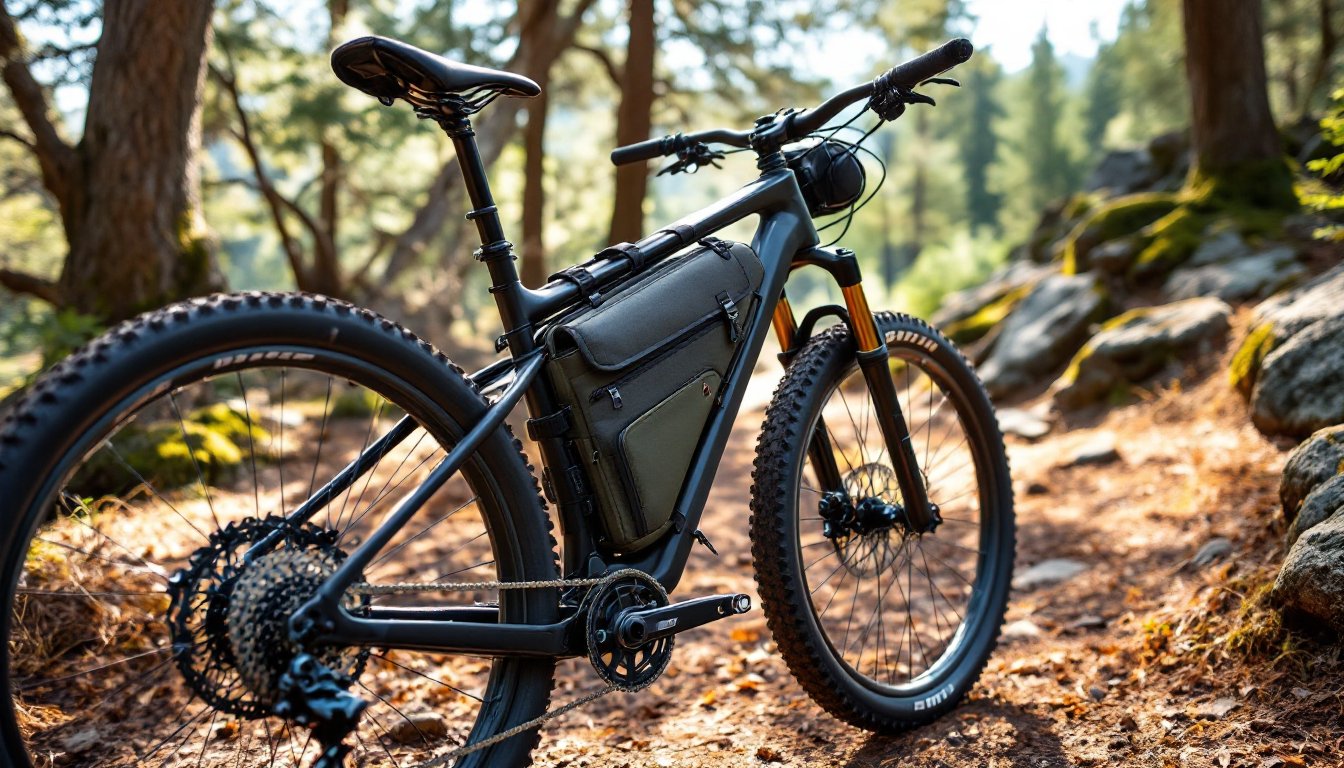
Frame bags fit in the main triangle between the top tube, down tube, and seat tube. They’re common in bikepacking but work just as well for trail riding. These bags typically use Velcro straps or bungee cords to secure themselves without drilling or permanent mounts. Capacity ranges from half a liter to several liters, depending on frame size and geometry.
Full-suspension bikes with rear shocks often have limited triangle space, so manufacturers make half-frame bags that occupy just the front portion. These still hold a multi-tool, tube, patches, and tire levers without interfering with suspension movement. Many bike storage projects offer custom DIY builds for riders with unusual frame shapes.
Frame bags keep contents protected from mud and trail spray. Most use water-resistant materials with coated zippers. They don’t bounce or sway, even on rough terrain. The downside: they can interfere with water bottle cages, forcing riders to choose between hydration and storage, or to mount a bottle elsewhere.
Top tube bags are smaller, usually 0.3 to 1 liter, and sit directly on the top tube between the stem and saddle. They attach with Velcro straps and offer quick access to snacks, a phone, or small tools. Some include a clear pocket for maps or smartphones. These bags work well on hardtails or bikes with plenty of standover clearance. Riders with low standover heights or aggressive riding positions may find them uncomfortable during stops or technical sections.
Top tube bags excel at organizing small items: CO₂ cartridges, a chain quick-link, a derailleur hanger, or a multi-tool. They keep frequently used items within arm’s reach without requiring the rider to dismount.
Saddle Bags and Seat Post Storage
Saddle bags (also called seat bags) mount beneath the saddle rails and hang behind the seat post. They range from tiny pouches barely big enough for a spare tube to larger models that hold a full repair kit plus layers. Traditional saddle bags use straps or clips: some newer designs use integrated rail mounts that eliminate sway.
For mountain biking, choose a bag rated for off-road use. Road-style saddle bags often lack the robust attachment systems needed to survive rocky descents and jumps. Look for bags with compression straps, reinforced attachment points, and waterproof materials.
One caution: dropper posts complicate saddle bag use. When the saddle drops, a large bag can hit the rear tire or fender, causing a crash or damaging the bag. Riders with droppers should select compact saddle bags that sit high and tight or use alternative storage.
Some riders prefer seat post-mounted tool canisters, rigid tubes that bolt directly to the seat post or hide inside it if the post is hollow. These canisters protect tools from the elements and eliminate bounce. They work especially well for longer items like tire levers or a mini pump. Installation typically requires removing the saddle, sliding the canister over the post, and re-securing everything. Make sure the canister doesn’t interfere with dropper post travel or internal cable routing.
Saddle bags and canisters keep weight low and rearward, which helps on climbs and doesn’t affect front-end handling. They’re among the most popular solutions because they don’t occupy the main triangle or interfere with bottle cages.
How to Choose the Right Tool Storage for Your Mountain Bike
Selecting on-bike storage depends on bike geometry, riding style, and the tools riders actually need to carry. Start by assessing the bike’s available mounting points and clearances.
Full-suspension bikes with internal cable routing and rear shocks have less usable frame space than hardtails. Measure the main triangle: height from the bottom bracket to the top tube, length from the head tube to the seat tube, and depth (accounting for water bottles and shock clearance). Many bag manufacturers provide fit guides or templates.
Riders with dropper posts should prioritize frame bags or compact saddle bags that won’t interfere with saddle travel. Test the bag at full dropper extension before heading out.
Consider the ride type. Short, local rides need minimal tools: a multi-tool, a spare tube, and tire levers fit easily in a small top tube bag or jersey pocket. Workshop setups at home handle bigger repairs, so trail kits stay lean.
Longer backcountry rides or bikepacking trips require more: patches, a chain tool, extra quick-links, a derailleur hanger (they’re bike-specific and fragile), CO₂ or a frame pump, and possibly a spoke wrench. These items demand the capacity of a frame bag or larger saddle bag.
Check material durability. Look for abrasion-resistant fabrics like Cordura or ballistic nylon, reinforced stitching, and waterproof zippers (often YKK-rated). Off-brand bags may use lighter materials that tear on sharp branches or frame edges.
Mounting system matters. Velcro straps are convenient but can loosen over time or slip on carbon frames. Bungee cords adjust easily but may not provide a tight fit. Some premium bags use bolt-on mounts or proprietary rail systems that eliminate all movement, worth it for aggressive riding or racing.
Finally, think about access. Bags that open wide with two-way zippers allow quick retrieval of buried items. Narrow openings or single-pull zippers force riders to dump contents on the trail. Some bags include internal organizers or elastic loops to keep small parts from migrating.
Test the bag on a short ride before committing to a long one. Bounce, noise, and interference with pedaling all become obvious quickly. Many tool organization guides emphasize the importance of trial runs to avoid surprises.
Installing and Organizing Your MTB Tool Kit
Proper installation and thoughtful organization make the difference between a functional repair kit and a jangling mess that falls off mid-ride.
Installation steps:
- Clean the mounting area. Wipe down frame tubes with isopropyl alcohol to remove dirt, grease, and old adhesive. This ensures Velcro and straps grip properly and prevents frame damage from trapped grit.
- Position the bag. Attach the bag loosely and sit on the bike in riding position. Check for clearance around knees, heels, and water bottles. Make sure zippers and openings face the direction that makes sense for access, usually toward the rider for top tube bags, downward or rearward for frame bags.
- Secure straps tightly. Pull all Velcro or buckle straps as tight as possible without deforming the bag. Loose bags will shift, bounce, and eventually wear through frame finish or tear mounting points. For bags with multiple straps, tighten in a crossing pattern (like lug nuts on a wheel) to distribute tension evenly.
- Protect the frame. On carbon frames or areas with exposed finish, add clear frame protection tape or helicopter tape under strap contact points. This prevents scratches and wear over time.
- Test before riding. Shake the bike and bounce it on the ground. Listen for rattles or movement. A properly installed bag should feel like part of the frame.
Organizing the tool kit:
Group items by function and frequency of use. Place the most-needed tools, multi-tool, tire levers, spare tube, in easily accessible pockets or near the bag opening. Bury less-common items like a derailleur hanger or spoke wrench deeper.
Use small stuff sacks or ziplock bags to organize tiny parts: CO₂ cartridges, valve cores, chain quick-links, and zip ties. This prevents them from rattling loose or disappearing into corners.
Wrap the spare tube in a small rag or old sock. This protects the tube from abrasion and gives riders a clean surface for handling greasy chains.
If carrying a mini pump, secure it with an elastic loop or strap inside the bag rather than letting it roll freely. Pumps can damage other tools or puncture tubes if loose.
Safety note: Always carry a basic first-aid kit on longer rides, bandages, antiseptic wipes, and pain relievers fit in a small pouch. Tools fix bikes: first aid fixes riders.
Label or photograph the bag’s contents. After a trailside repair, it’s easy to forget a tire lever or multi-tool in the dirt. A quick mental checklist (or a photo on a phone) ensures nothing gets left behind.
Periodically inspect the bag and its contents. Check for wear on straps, torn fabric, or broken zippers. Verify that CO₂ cartridges haven’t leaked, patches haven’t dried out, and the spare tube holds air. Replace consumables before they’re needed, not after they fail.
Conclusion
On-bike tool storage turns a mountain bike into a self-reliant trail machine, keeping essential repair gear accessible without the weight and discomfort of a backpack. Whether using a compact saddle bag for quick local rides or a full frame bag for backcountry adventures, the right storage setup improves handling, safety, and peace of mind. Take the time to install bags correctly, organize contents thoughtfully, and test the system before heading deep into the wilderness. A well-prepared bike gets riders home, even when things go wrong.