Entryways are where clutter lands first, keys, mail, bags, shoes, and in tight spaces, that chaos multiplies fast. A narrow entryway table with storage solves this by offering a slim footprint (usually 8–12 inches deep) that keeps essentials organized without blocking walkways. Unlike standard console tables that can eat up 15–18 inches of depth, narrow designs fit hallways, apartments, and compact foyers where every inch matters. Whether someone’s working with a 36-inch-wide corridor or a cramped rental entry, the right table provides function without turning the space into an obstacle course.
Table of Contents
ToggleKey Takeaways
- A narrow entryway table with storage solves clutter problems in tight spaces by offering a slim 8–12 inch depth that maintains safe hallway clearance and accessibility without blocking walkways.
- Solid wood construction with quality joinery (dovetail or mortise-and-tenon joints) outlasts particle board, while sealed finishes like polyurethane or hard wax oil provide durability in high-traffic areas.
- Floating wall-mounted designs work best for ultra-narrow spaces but require secure anchoring into studs or drywall toggles rated for 50+ lbs to ensure safety and stability.
- Smart storage organization—using drawer dividers, baskets on lower shelves, and vertical hooks—maximizes capacity even in compact narrow entryway tables without creating visual clutter.
- DIY narrow entryway table projects are achievable weekend builds using basic tools and materials like 1×12 boards, pocket screws, and side-mount drawer slides, with proper finishing for durability.
- Weekly maintenance with a damp cloth and periodic tightening of hardware keeps your narrow entryway table looking fresh and functional for years of daily use.
Why a Narrow Entryway Table with Storage Is Essential for Your Home
High-traffic entryways demand quick access and containment. A narrow table with built-in storage, drawers, shelves, or bins, keeps daily essentials within arm’s reach while hiding visual clutter. This matters in tight spaces where a 10-inch-deep table can hold the same organizational capacity as a deeper unit by using vertical storage instead of horizontal sprawl.
Safety and flow also come into play. The International Residential Code (IRC) recommends minimum hallway widths of 36 inches: a table that projects only 10–12 inches leaves 24–26 inches of clearance, enough for comfortable passage and wheelchair accessibility (ADA guidelines recommend 32 inches minimum clear width for accessible routes, though not always required in single-family homes).
For renters and frequent movers, narrow tables offer flexibility. They’re light enough to reposition, often require no anchoring (though wall-mounted versions should always hit studs or use toggle bolts in drywall), and transition easily between apartments, condos, and houses. Storage compartments also protect surfaces, keys and phones stay off finished wood, preventing scratches and water rings.
Key Features to Look for in a Narrow Entryway Storage Table
Depth and dimensions are non-negotiable. Measure the entryway first, accounting for door swing, baseboard projection (usually 0.5–0.75 inches), and foot traffic. Tables between 8–12 inches deep work for most narrow spaces. Anything shallower risks tipping if not wall-mounted: anything deeper encroaches on walkways.
Material and construction determine longevity. Solid wood (oak, maple, walnut) handles daily abuse better than particle board or MDF, though engineered wood with hardwood veneer offers a middle ground for budget builds. Check joinery, dovetail or mortise-and-tenon joints outlast pocket screws and glue. For DIY projects, nominal 1×12 lumber (actual 0.75 x 11.25 inches) provides a good tabletop width, while 1×6 or 1×8 boards work for shelving.
Storage configuration depends on what’s being stored. Drawers (3–5 inches deep) suit keys, sunglasses, and mail. Open shelving handles baskets, shoes, or bags. Hooks, either integrated or added, keep coats and leashes off the floor. If the table will hold a lamp or decorative items, ensure the top is level and at least 28–30 inches high (standard console height).
Finish and maintenance matter in high-touch areas. Sealed or painted surfaces (polyurethane, lacquer, or hard wax oil) resist moisture and scuffs better than raw wood. For DIYers, water-based polyurethane offers easy cleanup and low VOCs, though oil-based finishes provide deeper protection for heavily used surfaces.
Top Styles of Narrow Entryway Tables with Storage
Console Tables with Drawers and Shelves
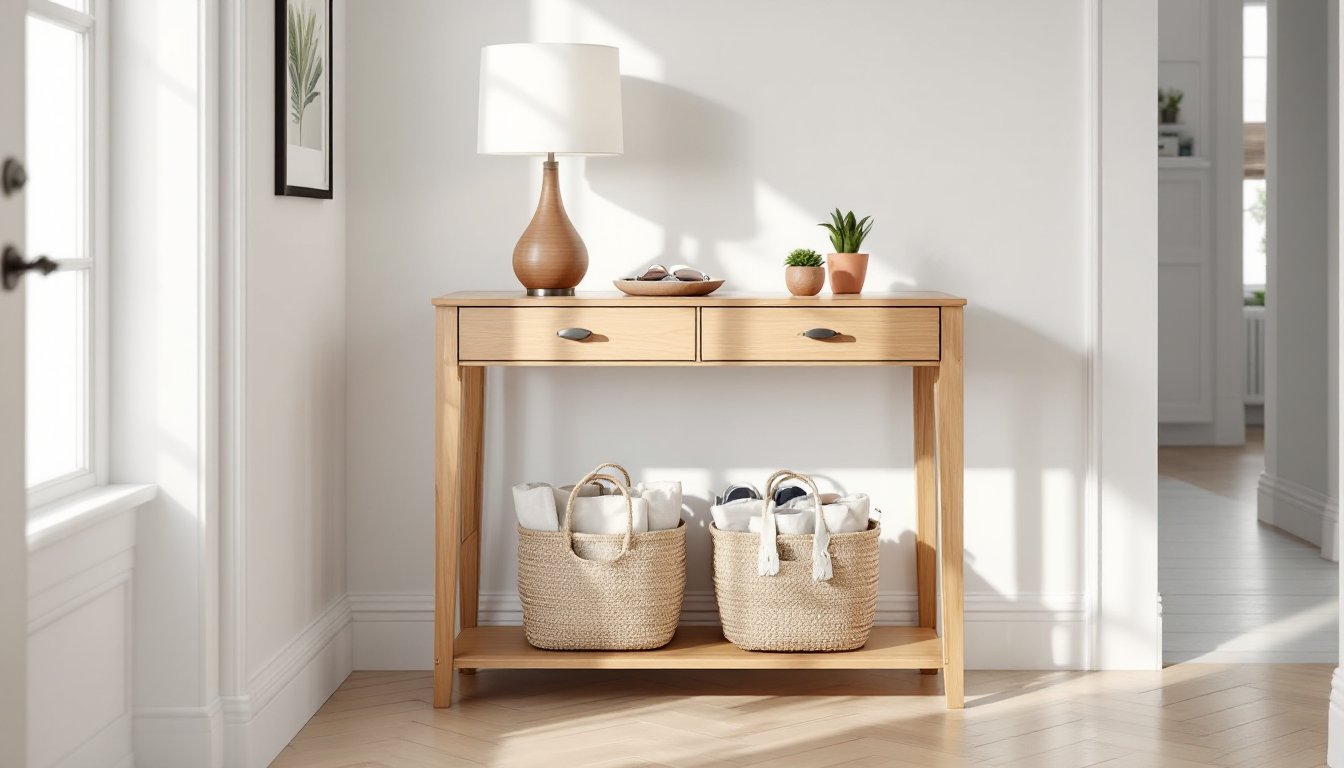
Traditional console tables with legs, one or two shallow drawers, and a lower shelf remain the most versatile option. The four-leg design distributes weight evenly and doesn’t require wall attachment, making it renter-friendly. Drawer depth typically ranges from 3–4 inches (enough for mail and small items) to 6 inches (accommodates gloves, charging cables, or small tools).
For a DIY build, a simple frame uses four 2×2 or 2×3 legs (actual 1.5 x 1.5 or 1.5 x 2.5 inches), cross-braced with 1×3 or 1×4 aprons for rigidity. Attach the tabletop (a single 1×12 or edge-glued 1×6 boards) with figure-eight fasteners or pocket screws to allow for wood movement, critical if using solid lumber, which expands and contracts with humidity.
Drawers can be built with simple rabbeted joints (a table saw or router with a rabbeting bit cuts the groove) and mounted on side-mount ball-bearing slides rated for 75–100 lbs. Bottom shelves, set 6–10 inches off the floor, provide space for shoe bins or baskets without creating a dust trap.
Wall-Mounted and Floating Options
Floating or wall-mounted tables eliminate floor clutter and work well in ultra-narrow spaces (as slim as 6–8 inches deep). They rely on strong anchoring into wall studs or masonry, drywall anchors alone won’t support weight. For a typical 36-inch-wide floating shelf with storage, use at least two lag bolts or structural screws into studs, or toggle bolts rated for 50+ lbs each in hollow walls.
Many floating designs incorporate hidden drawers or drop-down compartments. A simple version uses a 1×10 or 1×12 board mounted on a French cleat (a 45-degree beveled strip of wood or metal, one piece on the wall, one on the back of the table). The cleat distributes weight across multiple studs and allows for easy leveling.
Wall-mounted designs also pair well with integrated hooks or magnetic strips for keys. If adding hooks, position them 48–60 inches off the floor for average adult height, and space them 4–6 inches apart to prevent crowding. For a sleek look, many builders using DIY furniture plans incorporate hidden hardware and seamless drawer fronts.
DIY Narrow Entryway Table Projects You Can Build Yourself
A basic narrow console table is a weekend project for anyone comfortable with a saw, drill, and level. Start with a cut list: two 1×12 boards at 36 inches (or desired length) for the top and bottom shelf, four 2×2 legs at 28 inches (adjust for final height minus top thickness), and 1×3 aprons to connect the frame.
Cut all pieces to length using a miter saw or circular saw with a speed square for 90-degree cuts. Sand edges with 120-grit, then 220-grit sandpaper to avoid splinters. Assemble the frame using 2.5-inch pocket screws (a Kreg Jig simplifies this) or traditional butt joints with wood glue and finish nails. Pre-drill to prevent splitting, especially near board ends.
For added storage, build a simple drawer box from 1×6 boards: cut front, back, and sides, join with glue and brad nails or a dado joint (a 0.25-inch-deep groove cut with a router or table saw). The drawer bottom can be 0.25-inch plywood or hardboard set into a groove or simply nailed to the bottom edges. Mount with 12-inch side-mount drawer slides, they’re easier to install than undermount and cost $5–10 per pair.
Finish with primer and paint (use a bonding primer for better adhesion on raw wood) or stain and polyurethane. Apply at least two coats of poly, sanding lightly with 320-grit between coats for a smooth, durable finish. For those seeking more detailed woodworking project plans, templates often include cut diagrams and material optimization to reduce waste.
Safety note: Always wear safety glasses when cutting or sanding, and use a dust mask or respirator when applying finishes in enclosed spaces. If using a table saw for rip cuts or dados, keep hands clear of the blade and use a push stick for narrow stock.
How to Organize and Maximize Storage in Your Narrow Entryway Table
Even a slim table can hold a surprising amount if organized with intention. Drawer dividers, either custom-cut from 0.25-inch hardboard or purchased adjustable organizers, prevent small items from becoming a junk pile. Dedicate sections for keys, mail, charging cables, and sunglasses.
Baskets or bins on lower shelves corral shoes, pet supplies, or reusable bags. Choose baskets slightly shorter than the shelf height (leave 1–2 inches clearance) for easy access. Fabric or woven bins are lighter and less likely to scratch surfaces than rigid plastic.
Vertical storage extends capacity. Add adhesive hooks to the inside of drawer fronts for dog leashes or masks. Mount a narrow mail sorter or magazine rack to the wall above the table, keeping the surface clear for lamps or décor. If space allows, a small corkboard or pegboard (12 x 18 inches) mounted behind the table provides a landing spot for reminders and keys.
Lighting makes the table functional after dark. A small table lamp (15–20 watts LED, or 40–60 watt incandescent equivalent) or battery-powered motion-sensor puck lights underneath the top shelf illuminate the drawer and lower storage. If wiring a lamp, ensure the cord routes safely, zip-tie or staple it along the back leg to prevent tripping.
For renters or those looking for temporary solutions, step-by-step DIY project tutorials often include removable mounting methods using Command strips or temporary brackets that don’t damage walls.
Maintenance: Wipe down surfaces weekly with a damp microfiber cloth. Avoid harsh cleaners on finished wood, they can dull polyurethane or strip wax. Tighten drawer slides and hardware every few months, especially if the table sees heavy use. If the table wobbles, check for uneven floors and add felt pads or adjustable leveling feet to the legs.