Tiny beads rolling into every crevice of your workspace? A tangled mess of seed beads, Czech glass, and findings scattered across the table when you just need one color? Poor bead organization doesn’t just waste time, it kills the joy of beadwork. Whether you’re threading delicate jewelry or tackling multi-strand projects, accessible, sorted storage turns frustration into flow. This guide breaks down proven storage systems from compact containers to wall-mounted racks, plus DIY hacks that won’t blow your budget. No fluff, just practical options tailored to different collection sizes and workspaces.
Table of Contents
ToggleKey Takeaways
- Proper bead storage solutions protect your investment by preventing damage, discoloration, and corrosion of materials like glass, metal, and delicate finishes.
- Container-based storage including tackle boxes, multi-drawer organizers, and stackable containers are versatile and affordable for organizing beads by color, size, or project type.
- Wall-mounted systems like pegboard panels, floating shelves, and magnetic strips maximize vertical space and keep inventory visible for efficient bead selection.
- DIY bead storage hacks using repurposed items such as ice cube trays, pill organizers, spice jars, and hardware cabinets offer budget-friendly alternatives to specialty organizers.
- Choose your bead storage system based on collection size, workspace layout, bead types, and access frequency to ensure scalability and long-term usability as your collection grows.
Why Proper Bead Storage Matters for Crafters
Good bead storage isn’t about aesthetics, it’s about protecting your investment and your sanity. Beads sold by the strand or gram add up quickly, and damaged or mixed inventory means wasted money.
Preservation of materials tops the list. Seed beads and delicate finishes (galvanized, matte, or metallic coatings) can scratch, chip, or tarnish when stored improperly. UV exposure fades dyed beads. Humidity corrodes metal findings and weakens elastic cord. Airtight or UV-resistant containers prevent degradation, especially for glass and metal beads stored long-term.
Time efficiency is the second payoff. Searching through unlabeled bags or dumping mixed beads onto a tray to find one size wastes hours over a year. Sorted, visible storage, whether in clear compartments or labeled drawer dividers, cuts project prep time by half. You’ll spend more time creating and less cursing.
Safety and workspace cleanliness matter, too. Loose beads are a slip hazard on hard floors, and pets or kids can ingest small components. Secure lids and wall-mounted systems keep beads contained. For anyone balancing organized craft supplies alongside other hobbies, a tight storage system means your workspace stays usable for multiple projects without constant teardown.
Finally, scalability. A starter collection fits in a shoebox, but serious beaders accumulate thousands of varieties. Storage that grows with you, modular containers, stackable cases, expandable pegboard setups, prevents the cycle of buying, outgrowing, and replacing organizers every six months.
Container-Based Storage Solutions
Container systems are the workhorse of bead storage: portable, affordable, and endlessly configurable. They work for every collection size, from casual hobbyists to production jewelers.
Tackle Boxes and Compartment Organizers
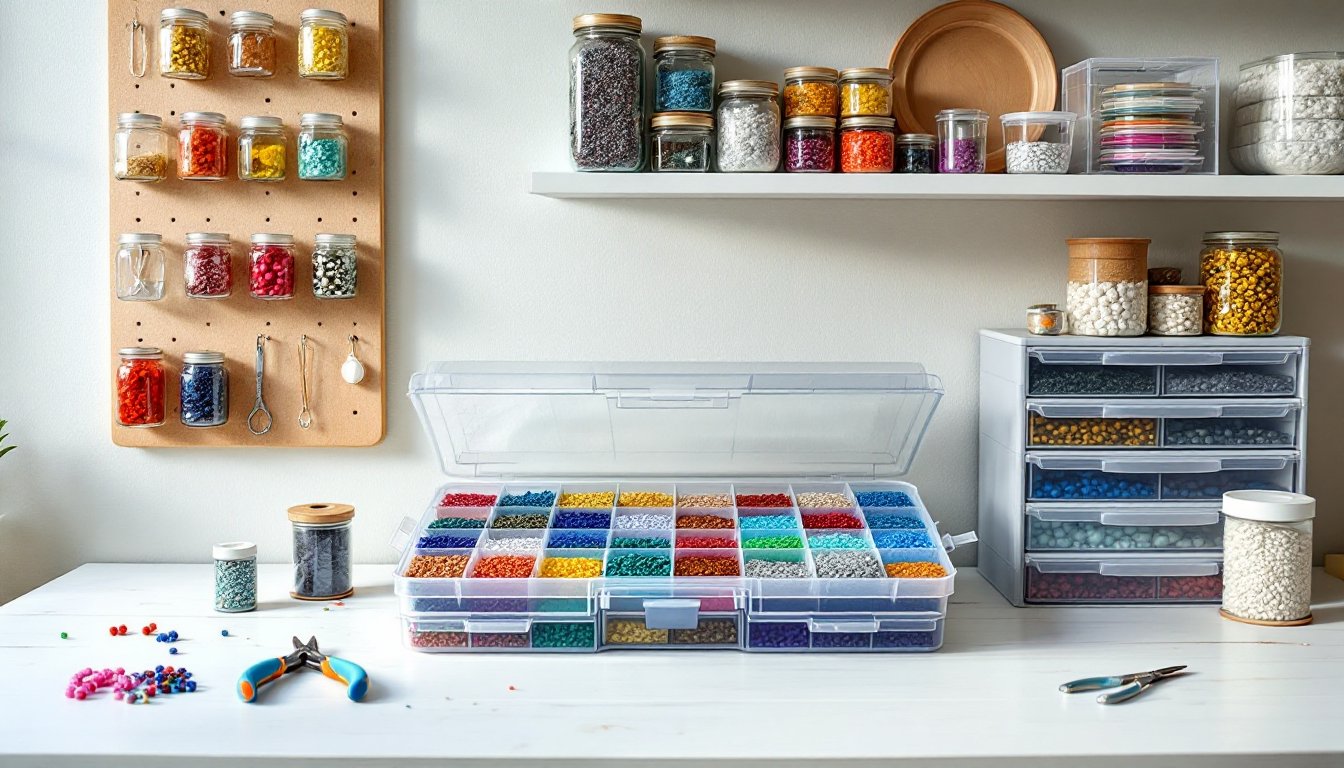
Plastic tackle boxes with adjustable dividers are a classic choice. Look for models with fixed dividers rather than removable ones if you store tiny seed beads, removable walls leave gaps where size 15/0 beads escape. A standard 3600-series utility box (typically 11″ × 7″ × 1.75″) holds 4–36 compartments and stacks flat. Use these for sorted beads by color, size, or project.
For larger collections, multi-drawer craft organizers shine. Units with 40–60 small drawers (each around 1.5″ × 2″ × 2″) let you sort seed beads by color family and size. Many include label slots on drawer fronts for quick reference. These sit on a desktop or shelf and work well when paired with broader storage deals during seasonal sales.
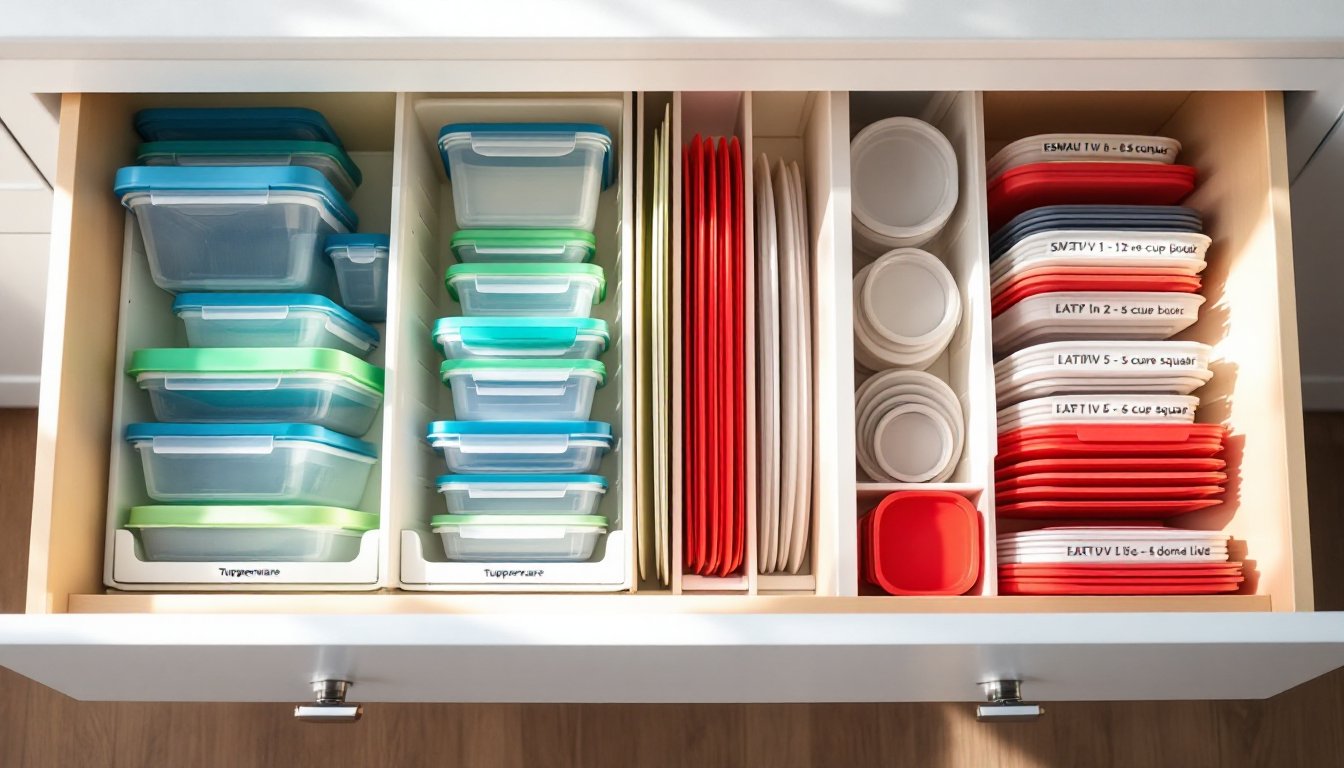
Stackable bead containers with screw-top compartments, often sold in towers of 3–5 jars, keep each color or bead type separate and airtight. Screw threads seal better than snap lids for fine beads. Disadvantage: they take up vertical space and can topple if stacked carelessly.
Bead tubes and vials (plastic or glass, 2″–4″ tall) work for small quantities or project kits. Store upright in drawer dividers or a repurposed spice rack. Use screw-cap vials for seed beads: flip-top caps leak. Label the cap or use color-coded lids for fast identification.
Tip: For portability, a tackle bag or rolling cart with removable trays carries your sorted containers to classes or craft fairs without repacking.
Wall-Mounted and Vertical Storage Systems
When desktop real estate runs out, go vertical. Wall-mounted storage clears work surfaces and keeps inventory visible, critical when you need to spot the right shade of turquoise at a glance.
Pegboard systems offer infinite customization. Mount a ¼” pegboard panel (4′ × 4′ or 2′ × 4′) to wall studs with pegboard spacers (usually ¼” or ½”) behind the panel so hooks can insert freely. Add pegboard bins, shelves, and jar hangers (metal loops that cradle Mason jars by the neck). Hang labeled jars of sorted beads, findings, or tools. Pegboard works in tight spaces, mount a 2′ × 2′ section above a fold-down workbench.
Magnetic storage suits metal findings, needles, and wire. Mount a magnetic strip (18″–24″) on the wall or inside a cabinet door. Attach small magnetic tins or spice jars with magnetic bases for beads. Limitation: only works for ferrous metals, not glass or plastic beads.
Clear hanging pockets (shoe organizers or wall files) hold bagged beads or small containers. A 24-pocket over-the-door organizer can store project kits, each pocket holding one colorway or design. Visibility is excellent, but pockets sag under heavy glass beads, reinforce pockets with cardboard inserts if needed.
Floating shelves with lip edges (1″ lip height) prevent containers from sliding off. Install 12″ or 16″ deep shelves to hold stacked utility boxes or drawer units. Use shelf risers or tiered organizers to maximize vertical stacking without burying back-row containers.
Safety note: Anchor all wall-mounted systems into wall studs (typically 16″ on center) or use toggle bolts rated for the load if mounting to drywall without stud backing. A 4′ pegboard loaded with jars can exceed 30 lbs.
DIY Bead Storage Ideas on a Budget
You don’t need specialty organizers to tame a bead collection. Repurposed household items and basic materials work just as well, and cost a fraction.
Ice cube trays (silicone or plastic) sort small quantities by color or size. Silicone trays resist cracking and won’t scratch beads. Stack them in a shallow drawer or snap a lid (cut from clear acrylic sheet or a cutting board) over the top to prevent spills. For travel, wrap the tray in plastic wrap.
Pill organizers (7-day or 28-day versions) offer tiny, lidded compartments perfect for seed beads or findings. They’re airtight and portable. Buy them in bulk from dollar stores.
Baby food jars or spice jars work for larger beads or small batches. Glue lids to the underside of a shelf or cabinet, then screw jars up into the lids, suspended storage that’s visible and space-efficient. Label jar bottoms with a paint pen. This system appears frequently in creative craft room setups for good reason.
Cardboard drawer dividers from cereal boxes or mailing tubes cut to size separate compartments in larger containers or drawers. Measure, cut, and notch dividers to interlock in a grid pattern. Cover with contact paper if you want a finished look.
Foam core or cardboard bead boards organize strands in progress. Cut slots every ½” along a board edge to hold stringing wire or thread. Lean boards on an easel or mount to a wall with Command strips.
Repurposed hardware cabinets (the kind with 20–40 small drawers for screws and nails) show up at garage sales and thrift stores for $10–30. They’re built tough, with metal or impact-resistant plastic drawers. Clean thoroughly, label drawer fronts, and you’ve got pro-level storage.
Hanging plastic bags in binder rings is a low-tech favorite from Instructables DIY communities. Load beads into small zipper bags, punch a hole in the corner, and thread onto a metal binder ring or carabiner. Hang the ring on a hook or pegboard. Sort by color or project.
How to Choose the Right Storage Solution for Your Space
No single system works for everyone. Match your storage to collection size, workspace layout, and the types of beads you use most.
Collection size drives the decision. Casual crafters with under 50 bead varieties can get by with a few utility boxes or a small drawer unit. Serious beaders juggling 500+ colors need modular, scalable storage, think pegboard walls, multi-drawer cabinets, or a dedicated shelving unit.
Workspace footprint matters. A corner desk benefits from vertical storage (wall-mounted pegboard or hanging pockets). A dedicated craft room can accommodate floor-standing drawer units, rolling carts, or a combination workbench-and-shelf setup. If you craft at the kitchen table, portability wins, tackle boxes or stacking containers that tuck into a closet between sessions.
Bead types influence container choice. Seed beads (size 6/0 to 15/0) need small, sealed compartments to prevent mixing: vials, pill organizers, or divided tackle boxes work best. Larger beads (gemstones, lampwork, chunky glass) fit in wider compartments or jars. Delicate or coated beads (galvanized, metallic, matte finishes) require padded or scratch-resistant containers, line plastic boxes with felt or use glass jars.
Access frequency shapes layout. Beads used weekly belong in front-and-center storage (desktop organizers, top pegboard rows). Seasonal or specialty beads can go in stacked boxes on high shelves or in closed cabinets. Label everything, even if you think you’ll remember, you won’t.
Budget constraints are real. Start with repurposed containers (jars, ice trays, spice organizers) and add modular systems as your collection grows. Many crafters blend DIY and commercial storage, homemade pegboard with store-bought bins, or thrifted cabinets paired with new drawer dividers. Resources like The Spruce Crafts offer side-by-side comparisons of budget versus premium storage options.
Future growth deserves thought. If you’re expanding into new bead types or techniques, choose systems that adapt, adjustable dividers, stackable units, or pegboard that accepts add-on accessories. Avoid locked-in solutions (fixed compartments that can’t resize, custom-built units that don’t scale) unless your collection is stable.
Conclusion
Organized bead storage isn’t a luxury, it’s the difference between a creative session and a scavenger hunt. Whether you’re mounting pegboard, repurposing pill bottles, or investing in a modular drawer system, the right setup protects your materials, saves time, and scales with your skills. Start with what fits your space and budget, label everything, and adjust as your collection grows. Your next project starts faster when every bead has a home.