A well-organized workshop isn’t just easier on the eyes, it’s safer, more efficient, and keeps tools from walking off or rusting in forgotten corners. Whether someone’s working out of a two-car garage or a compact basement shop, proper storage turns chaos into a functional workspace. The right system depends on the type of work being done, the available square footage, and how often tools need to travel. From wall-mounted racks to rolling cabinets and portable totes, this guide covers the most effective storage options for homeowners and DIYers in 2026, with practical advice on choosing what works best.
Table of Contents
ToggleKey Takeaways
- Proper best tool storage protects investments by preventing rust, dust damage, and tool degradation while improving workshop safety and efficiency by reducing time spent hunting for misplaced items.
- Wall-mounted systems like pegboard, slat walls, and French cleats maximize vertical space in compact workshops and are more affordable than rolling cabinets, with pegboard starting under $50.
- Rolling cabinets and tool chests offer enclosed, dust-resistant storage with drawer organization for stationary workshops, with professional-grade options like Milwaukee Packout and DeWalt ToughSystem providing modular flexibility for both shop and jobsite use.
- Portable tool storage such as tool bags, hard-shell boxes, and rolling carts should be selected based on the type of work and portability needs, with modular stackable systems offering the best balance for DIYers who work between multiple locations.
- When choosing tool storage, assess available space, match systems to tool types and access frequency, budget realistically (starting under $50 for pegboard or $300–$800 for rolling cabinets), and plan for future growth in your tool collection.
- Integrate proper lighting, electrical access, and local fire code compliance into your storage layout, and test placement with temporary setups before committing to permanent installations.
Why Proper Tool Storage Matters for DIYers and Homeowners
Good tool storage does more than clear floor space. It protects investments, power tools, hand tools, and accessories that can easily total thousands of dollars. Moisture, dust, and physical damage cut tool lifespan, and a rusted wrench or dull saw blade costs time and money to replace.
Organization also improves safety. Loose tools on benches or floors become tripping hazards, and sharp edges left exposed can cause injuries. When everything has a designated spot, it’s easier to spot what’s missing and keep track of maintenance schedules.
Efficiency matters, too. According to Popular Mechanics, the average DIYer wastes 10–15 minutes per project just hunting for misplaced tools. Over a year, that adds up. A well-planned storage system puts frequently used items within arm’s reach and reserves deeper storage for seasonal or specialty gear.
Finally, resale value plays a role. A tidy, well-equipped workshop signals that a homeowner takes care of their property. It’s a subtle but real boost if selling a home with a garage or shed that buyers can picture using themselves.
Top Tool Storage Systems for Home Workshops
Wall-Mounted Tool Organizers and Pegboard Systems
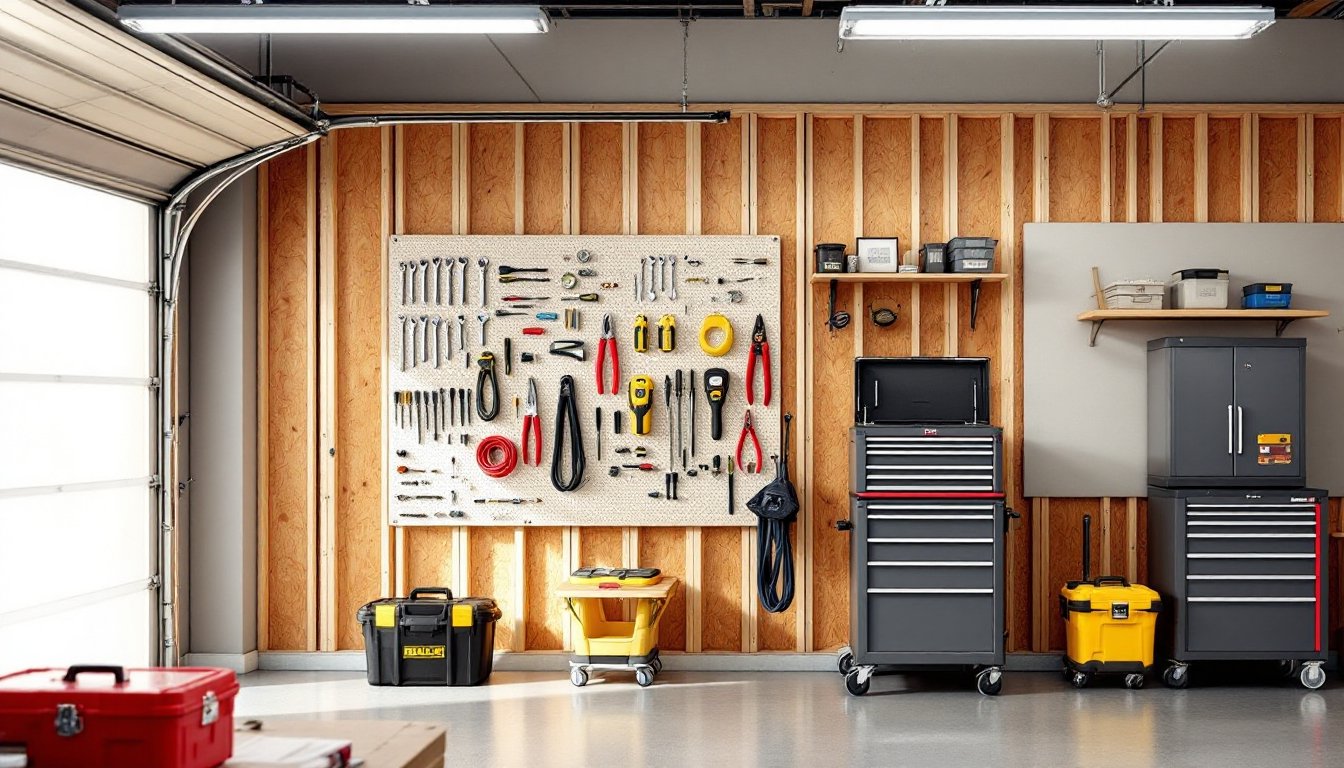
Wall-mounted storage is the workhorse of compact workshops. It maximizes vertical space, keeps tools visible, and adapts to changing needs. Pegboard is the classic choice, affordable, easy to install, and endlessly customizable. Standard pegboard comes in 1/4-inch tempered hardboard sheets, typically 4×8 feet, which can be cut to fit any wall section. Hooks, bins, and shelves slot in and move around as tool collections evolve.
For heavier loads, slat wall systems offer more strength. Made from MDF or PVC panels with horizontal grooves, slat walls hold brackets rated for 50–100 pounds each. They’re a step up in cost but handle larger power tools, circular saw cases, and even folding workbenches.
French cleat systems provide another heavy-duty option. A pair of interlocking 45-degree beveled boards, one mounted to the wall studs, the other attached to tool holders or shelves, creates a simple, strong hanging system. French cleats work especially well for custom holders: drill organizers, battery charging stations, or air hose reels.
When installing any wall-mounted system, fasten directly into wall studs (typically 16 inches on center) or use appropriate anchors rated for the expected load. A single misplaced pegboard hook loaded with a heavy drill can pull the whole board off drywall.
Many homeowners combine systems. Pegboard for hand tools, slat wall for bulkier items, and French cleats for custom storage create a flexible, high-capacity setup. This approach also lets someone organize small parts and fasteners alongside power tools.
Tool Chests and Rolling Cabinets
Tool chests and rolling cabinets suit workshops where tools stay put most of the time but occasionally need to move around the garage or driveway. They offer enclosed storage that protects against dust and humidity, and drawer dividers keep small parts sorted.
A basic 5-drawer rolling cabinet (around 26 inches wide) holds a starter set of hand tools, fasteners, and a few cordless drills. For serious hobbyists or weekend contractors, combo units, a top chest sitting on a rolling base cabinet, deliver 10+ drawers and 40+ cubic feet of storage. These units often include ball-bearing drawer slides rated for 100 pounds per drawer, keyed locks, and rubberized drawer liners to prevent tools from sliding.
Material matters. Steel cabinets (18- to 22-gauge) offer durability and security but add weight. A fully loaded steel combo can exceed 400 pounds, so make sure the garage floor is level and solid. Aluminum or composite cabinets weigh less and resist rust but may dent more easily.
Look for cabinets with casters rated for the total load. At least two should lock to prevent rolling during use. Polyurethane or rubber wheels work best on concrete: smaller hard plastic wheels can crack under heavy loads.
Drawer organization accessories, foam inserts, adjustable dividers, and pegboard drawer liners, turn a generic cabinet into a tailored system. Cutting custom foam for socket sets or drill bit indexes takes time but pays off in quick access and tool protection.
Professional-grade brands like Milwaukee Packout-compatible tool storage and DeWalt ToughSystem integrate with modular stackable boxes, creating a hybrid between stationary cabinets and portable storage. For DIYers who work both in the shop and at job sites, this flexibility is worth the premium.
Portable Tool Storage Options for On-the-Go Projects
Not every project happens in the workshop. Deck repairs, fence installations, and jobsite remodels require tools to travel. Portable tool storage needs to balance capacity, durability, and ease of transport.
Tool bags (canvas, ballistic nylon, or polyester) work for electricians, plumbers, or trim carpenters who carry a focused set of hand tools and a cordless drill. Look for reinforced bottoms, padded shoulder straps, and interior pockets sized for specific tools. Open-top totes offer quick access but expose tools to weather and theft. Zippered or flap-top bags add security.
Hard-shell tool boxes (plastic or metal) protect contents better than soft bags and stack in truck beds or on garage shelves. A 22-inch portable tool box with a removable tray is the sweet spot for most homeowners, big enough for a circular saw, cordless tools, and hand tools, but still light enough to carry with one hand when half-loaded.
For larger kits, rolling tool bags or carts combine portability with capacity. Models with telescoping handles and oversized wheels (5 inches or more) navigate gravel, grass, and jobsite debris better than small casters. Some include detachable pouches or organizers that clip onto the main bag, letting users grab just what they need for a specific task.
Modular stackable systems like Milwaukee Packout, DeWalt ToughSystem, or Ridgid Pro Gear dominate the portable market. These systems use interlocking bases so boxes, organizers, and soft bags snap together and move as a single unit. A rolling base supports the stack, and individual modules pop off as needed. It’s a flexible approach that works equally well in a van, on a dolly, or stacked in a corner of the garage.
Weather resistance varies. Look for IP ratings (Ingress Protection) on higher-end boxes. An IP54 rating means dust-resistant and splash-proof, fine for most outdoor work. Fully waterproof boxes (IP65 or higher) cost more but protect sensitive electronics and precision measuring tools.
Portable storage works best when it complements stationary systems. Keep everyday tools in the workshop and load only what’s needed for each project. This reduces the temptation to haul everything, which leads to overweight boxes, back strain, and tools left behind.
How to Choose the Right Tool Storage for Your Space and Needs
Choosing storage starts with honest answers to a few questions: How much space is available? What type of work happens most often? How many tools need homes?
Assess the space. Measure available wall area, floor footprint, and ceiling height. In a single-car garage shared with a vehicle, wall-mounted storage and overhead racks make more sense than rolling cabinets. A dedicated two-car workshop can accommodate full-size tool chests and freestanding shelving units. Basements with low ceilings benefit from stackable storage and shallow wall cabinets.
Match storage to tool types. Hand tools (wrenches, screwdrivers, pliers) suit pegboards, magnetic strips, or shallow drawers. Power tools need deeper shelves or cabinets with adequate clearance for batteries and chargers. Long-handled tools (rakes, shovels, brooms) work best on wall-mounted racks or ceiling hooks.
Consider access frequency. Daily-use tools deserve prime real estate, eye level on a pegboard or the top drawer of a rolling cabinet. Seasonal or specialty tools (tile saw, pressure washer, holiday decorations) can go on high shelves or in storage bins at the back of the garage.
Budget realistically. Quality tool storage isn’t cheap, but it doesn’t have to expensive. A sheet of pegboard, hooks, and furring strips to mount it costs under $50. A mid-grade rolling cabinet runs $300–$800. Professional modular systems start around $200 and climb past $1,000 for complete setups. Prices fluctuate with material costs and seasonal storage deals, so shopping during major sales (Black Friday, Fourth of July) can save 20–40%.
Plan for growth. Tool collections expand. Leave room for new acquisitions by installing more pegboard than currently needed or choosing cabinets with empty drawers. Modular systems make future expansion easier, add another box or shelf when the budget allows.
Integrate other household storage. Workshops often double as general storage solutions for sporting gear, paint supplies, or seasonal items. Dedicate specific zones to keep workshop tools separate from household clutter.
Don’t overlook safety and code requirements. In some jurisdictions, storing flammable liquids (paints, solvents, fuels) requires approved metal cabinets. Check local fire codes. If the workshop shares space with a water heater or furnace, maintain required clearances, typically 36 inches in front of appliances and 18 inches on sides.
Lighting and electrical access affect storage layout. Position frequently used tools near outlets to minimize extension cord clutter. Under-cabinet LED strips or track lighting improve visibility in shadowed corners where wall-mounted storage might otherwise create dead zones.
Finally, test before committing to a permanent install. Mock up pegboard layouts with painter’s tape on the wall. Move a rolling cabinet around the shop for a week to find the best spot. Adjustments are easier before drilling dozens of holes.
Conclusion
The best tool storage system is the one that gets used. Whether it’s pegboard and bins, a rolling cabinet, or a full modular setup, the goal is the same: protect tools, save time, and create a workspace that makes projects easier. Start with what fits the space and budget, then build from there as needs evolve.