Office storage lockers aren’t just for gyms and schools anymore. Modern workplaces, home offices, coworking spaces, and corporate settings, need secure, personal storage that keeps clutter under control and valuable items safe. Whether someone’s dealing with a shared workspace, a small home office, or a business with multiple employees, the right locker setup can reclaim floor space, improve workflow, and end the daily hunt for misplaced tools or documents. The 2026 storage market offers more versatile designs and installation-friendly options than ever before.
Table of Contents
ToggleKey Takeaways
- Office storage lockers provide secure, personal compartments that reclaim floor space and improve workflow in home offices, coworking spaces, and corporate environments.
- Choose materials based on your environment: metal for durability and heavy loads, wood for aesthetics in professional settings, and plastic for moisture-resistant humid climates.
- Proper installation requires wall anchoring to studs—especially for tall units—and a level check to ensure doors operate smoothly and comply with safety standards.
- Maximize locker functionality with magnetic accessories, adjustable shelving, cable management solutions, and color-coding to optimize storage efficiency and organization.
- Office storage locker costs range from $150–$700 per unit, with multi-tier configurations offering space-saving alternatives for shared workspaces.
What Are Office Storage Lockers and Why You Need Them
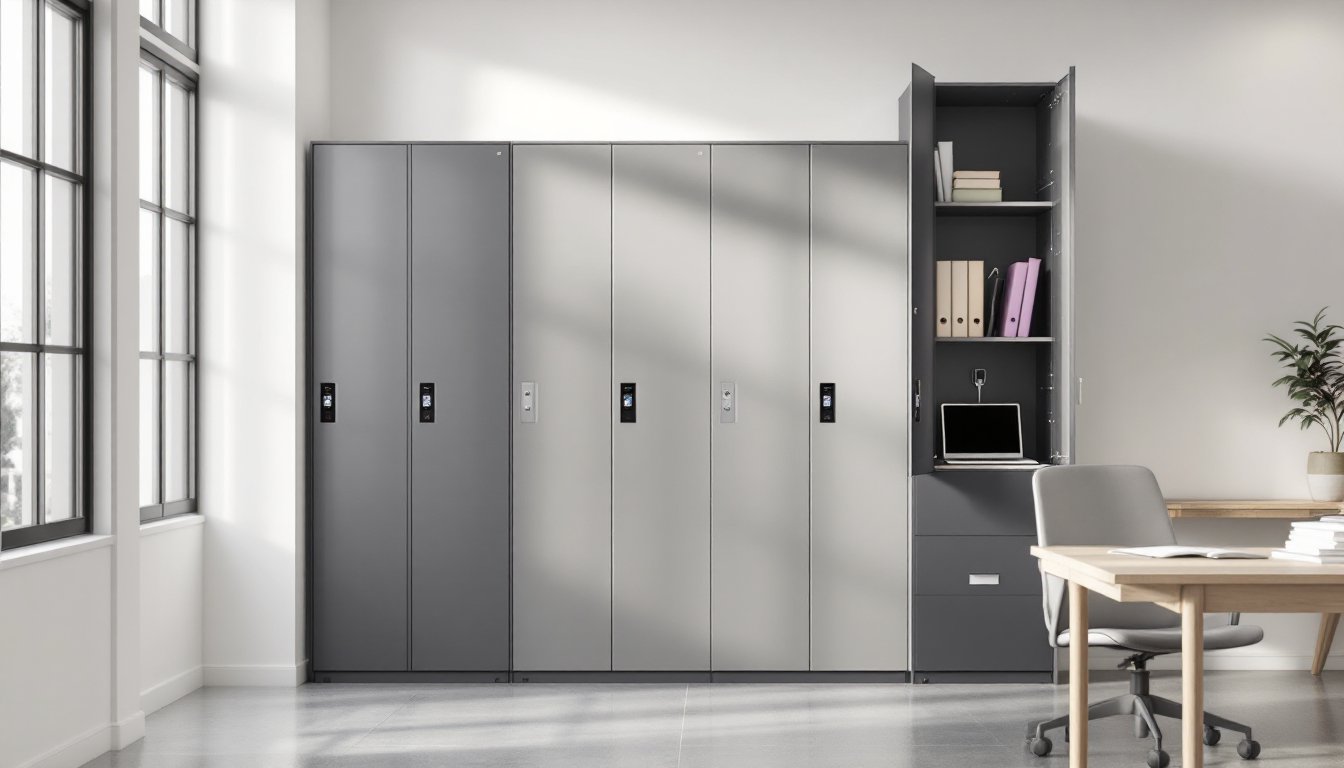
Office storage lockers are individual, lockable compartments designed to store personal items, work equipment, files, or supplies in a shared or private workspace. Unlike open shelving or communal cabinets, lockers provide dedicated, secure storage for each user.
Standard locker dimensions range from single-tier units (roughly 72″ H × 12″ W × 18″ D) down to multi-tier configurations that stack two, three, or even six compartments in the same footprint. Depth options typically run 12″, 15″, or 18″, accommodating everything from laptops and charging cables to bulky coats and safety gear.
They solve several workspace problems at once. In home offices, they keep client files, electronics, or craft supplies locked away from kids or pets. In coworking environments, they offer secure storage for freelancers who hotdesk and can’t leave gear overnight. Corporate offices use them to reduce desk clutter, assign personal space in open-plan layouts, and meet security requirements for sensitive documents.
Safety and code compliance matter here. If the office is in a commercial building, check local fire codes, locker banks can’t block egress routes or fire extinguishers. For home offices, it’s less about permits and more about anchoring tall units to wall studs to prevent tip-over hazards, especially in earthquake-prone regions.
Types of Office Storage Lockers for Every Space
Choosing the right material depends on budget, aesthetics, and the environment where the lockers will live.
Metal vs. Wood vs. Plastic Storage Lockers
Metal lockers are the workhorses. Cold-rolled steel or aluminum units resist dents, support heavy loads, and come with welded or reinforced seams. Look for 16- or 18-gauge steel for durability: thinner gauges (20+) dent more easily. Powder-coat finishes in neutral grays or custom colors resist rust, but bare metal can corrode in humid basements or coastal climates. Metal lockers handle 150–200 lbs per compartment and typically cost $150–$400 per single-tier unit, depending on gauge and finish. They’re ideal for garages, workshops, or industrial-style home offices.
Wood lockers blend into home offices, executive suites, or design-forward coworking spaces. Hardwood veneers over engineered cores keep weight manageable while offering rich finishes, oak, walnut, or maple. Solid wood is rare (and heavy) but possible for custom builds. Wood units often include soft-close hinges and integrated cable grommets. They cost $300–$700 per compartment and require climate control: humidity swings can warp doors or split panels. Not recommended for unfinished basements or garages.
Plastic (HDPE) lockers resist moisture, rust, and graffiti, making them popular for pool houses, mudrooms, or humid climates. High-density polyethylene won’t corrode, and many models use through-color construction, scratches don’t expose a different underlayer. They’re lighter than metal (30–50 lbs per unit) but also less rigid: tall units need wall anchoring. Expect $200–$500 per locker. Plastic works well for home storage solutions where aesthetics take a backseat to function, but the industrial look won’t suit every space.
How to Choose the Right Office Storage Locker
Start with a tape measure and honest inventory of what needs storage. Measure the installation area, height, width, and depth, and note ceiling obstructions (HVAC vents, sprinkler heads). Factor in door swing: lockers typically add 12–16″ of clearance when open.
Locking mechanisms vary widely. Keyed cam locks are standard and inexpensive but require key management. Combination dial locks eliminate keys but slow access. Digital keypad or RFID locks offer audit trails and keyless convenience at $50–$100 per lock upgrade. For home offices with kids, a simple hasp lock accepting a padlock may suffice.
Consider ventilation if storing gym gear, tools, or electronics that generate heat. Louvered or perforated doors improve airflow and reduce odors. Non-vented doors provide cleaner lines and better security for documents.
Load capacity matters for tool storage. A locker rated for 200 lbs can handle cordless drills, hand tools, and hardware bins: anything heavier (table saw accessories, tile samples) needs reinforced shelving or a dedicated tool cabinet.
Budget $150–$700 per locker, plus installation hardware. Multi-tier banks save floor space, a six-compartment unit occupies the same 12″ × 18″ footprint as a single tall locker but serves six users. Many office storage ideas emphasize vertical stacking to maximize tight spaces.
DIY Installation Guide for Office Storage Lockers
Most lockers ship unassembled or as modular banks. Installation is straightforward but requires basic tools and attention to plumb.
Tools and Materials:
- Cordless drill with Phillips and hex bits
- Level (4′ recommended for tall units)
- Stud finder
- Socket set (if assembly uses hex bolts)
- Safety glasses and work gloves
- Wall anchors: ¼” lag bolts for wood studs, or toggle bolts for drywall-only applications
- Shims (composite or cedar) for leveling
Step-by-Step Installation:
-
Assemble the locker bank. Lay out all panels and hardware. Most manufacturers use tab-and-slot side panels with ¼-20 bolts or rivets. Follow the diagram, forcing misaligned panels strips threads. Finger-tighten all bolts first, then go back with a socket wrench. Over-torquing thin-gauge metal can dimple panels.
-
Check for level. Before anchoring, set the unit in place and check plumb on all sides with a 4′ level. Uneven floors are common: slip composite shims under low corners. A 1/4″ tilt may not look dramatic, but locker doors will swing open or refuse to close.
-
Locate studs. Use a stud finder to mark 16″ or 24″ on-center framing behind the drywall. Tall lockers (72″+) must anchor to at least two studs to meet tip-over safety standards. If studs don’t align with pre-drilled locker holes, drill new mounting holes in the top rear panel.
-
Anchor to the wall. Drill pilot holes and drive ¼” × 3″ lag bolts through the locker’s rear mounting flanges into studs. Use washers to distribute load. For drywall-only installations (not recommended for units over 60″ tall), use heavy-duty toggle bolts rated for at least 100 lbs each. This step isn’t optional, workshop safety guides consistently highlight anchoring as critical for preventing injuries.
-
Install locks and final hardware. Most cam locks drop into pre-punched holes and secure with a retaining clip. Digital locks require battery compartments: some need cable routing for hardwired power. Test each lock before loading the locker.
Common Mistakes:
- Skipping the level check. Doors won’t close properly on a tilted frame.
- Using drywall anchors alone for tall units. They pull out under lateral force.
- Assembling directly against the wall, then realizing rear bolts are inaccessible. Leave 6–8″ clearance until anchoring is complete.
No permit is typically required for stand-alone locker installation in residential settings, but commercial offices may need approval if altering egress paths or fire-rated walls.
Creative Ways to Maximize Your Office Locker Storage
Lockers offer more flexibility than their rigid exteriors suggest. Strategic add-ons and layout tweaks can double usable space.
Magnetic accessories transform metal doors into organizers. Magnetic hooks hold headphones, charging cables, or keys. Magnetic bins store pens, USB drives, or small fasteners. Avoid overloading, most doors handle 5–10 lbs of magnetic weight before hinges sag.
Adjustable shelving replaces fixed shelves in many units. Peg-and-clip systems let users reconfigure heights to fit binders, laptops, or stacked storage bins. Add a slant shelf at eye level for mail or daily files.
Locker liners cut from adhesive-backed shelf liner or thin cork protect finishes and reduce noise. They’re especially useful in metal lockers where tools clang against walls.
For shared offices, color-coding locker doors or magnetic nameplates helps users identify their space at a glance. Powder-coat finishes come in dozens of colors: mixing and matching adds personality without sacrificing function. Browse office locker design ideas to see how color and layout choices transform utilitarian storage into cohesive workspace elements.
Cable management matters for tech-heavy users. Drill a 1″ grommet hole near the top rear corner (if the manufacturer didn’t include one) and route charging cables inside. A power strip mounted to the interior side wall with Velcro keeps cords tidy.
If floor space is tight, consider wall-mounted slim lockers (6″ or 8″ deep). They won’t hold coats or bags, but they’re perfect for tablets, notebooks, and daily essentials, freeing up desk drawers for active projects.
For those juggling multiple storage needs, pairing office lockers with off-site storage rental can keep seasonal files or archived materials out of the workspace entirely, leaving lockers free for active gear.
Conclusion
Office storage lockers bring order, security, and reclaimed space to any work environment. Whether installing metal units in a home workshop or wood lockers in a design-focused studio, the key is choosing the right material, anchoring properly, and outfitting compartments to match workflow. With straightforward installation and endless customization options, lockers turn chaos into controlled storage, no contractor required.