A cluttered shower isn’t just frustrating, it’s a safety hazard. Shampoo bottles crammed on the tub edge topple over mid-rinse, razors disappear into tile corners, and that expensive face wash gets buried behind the conditioner graveyard. Whether you’re working with a cramped apartment stall or a spacious walk-in, smart storage turns chaos into calm. The good news? You don’t need a full gut-and-remodel to fix it. From built-in niches that add resale value to weekend-worthy DIY projects, these ten storage solutions will help anyone reclaim their shower space without very costly or calling a contractor.
Table of Contents
ToggleKey Takeaways
- Proper shower storage solutions reduce slip-and-fall hazards and prevent mold buildup, making them essential for both safety and bathroom hygiene.
- Built-in shower niches and recessed shelving add significant resale value and provide permanent, rust-resistant storage without consuming floor space.
- Tension pole storage systems offer rent-friendly installation with zero drilling required, though they work best on flat ceilings and require monthly maintenance checks.
- Material selection matters: stainless steel (304-grade) outlasts chrome in humid environments, while marine-grade materials and proper waterproofing are non-negotiable for floating shelves.
- DIY shower storage projects like rope baskets and PVC pipe holders can be completed in 1-2 hours for under $35, offering affordable customization for budget-conscious homeowners.
- Assess your household’s actual storage needs by counting bottles and considering height variations before selecting a shower storage solution that matches your skill level and bathroom layout.
Why Proper Shower Storage Matters
Beyond aesthetics, organized shower storage impacts daily function and long-term home value. Bottles left on shower floors contribute to slip-and-fall accidents, one of the most common bathroom injuries according to CDC data. Proper drainage around stored items also prevents mold and mildew buildup, which thrives in standing water under soap dishes and caddies.
From a home value perspective, built-in storage features like niches and tile shelves rank high on buyer wish lists. Real estate agents consistently note that well-designed bathrooms with integrated storage sell faster than those with aftermarket plastic organizers dangling from showerheads.
Think about your household’s actual needs before choosing a solution. A family of four needs different capacity than a single-person household. Count your bottles, consider height differences (kids need lower access), and factor in specialty items like loofahs, razors, and exfoliating tools. The right system holds everything without looking like a drugstore shelf exploded.
Built-In Shower Niches and Recessed Shelving
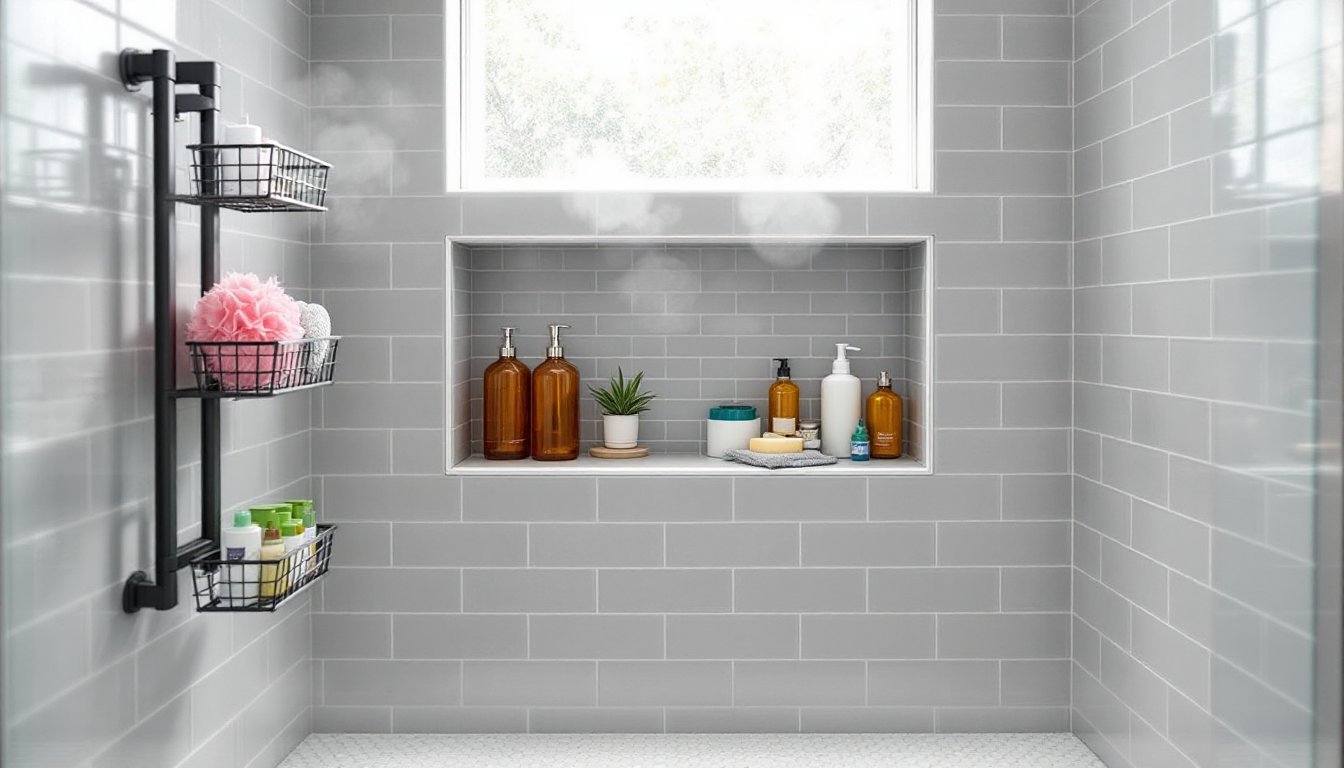
Shower niches are the gold standard for permanent storage, a recessed cavity built into the shower wall during construction or renovation. Standard dimensions run 12-14 inches wide by 20-24 inches tall, though custom sizes work for specific bottle collections.
Installation requires cutting into wall studs and waterproofing meticulously. This is structural work: you’ll need to locate studs (typically 16 inches on center in most homes), cut through drywall or cement board, frame the opening with treated lumber, and apply a waterproof membrane before tiling. Many jurisdictions don’t require permits for non-load-bearing niche installation, but check local building codes, especially if you’re touching plumbing or electrical.
Position niches between 48-52 inches from the shower floor for comfortable reach. For households with varying heights, consider stacking two niches vertically. Tile the interior with the same material as your shower walls for a seamless look, or use contrasting accent tile.
Pros: Adds resale value, zero floor footprint,永久 solution that won’t rust or degrade. Cons: Requires demolition and tile work, costs $300-800 in materials alone if DIY-ing (more if hiring out), and can’t be repositioned once built.
Alternative: Prefabricated niche inserts made from PVC or stainless steel simplify waterproofing. Brands like Schluter and Wedi offer ready-to-tile models that drop into framed openings, cutting installation time significantly.
Corner Caddies and Hanging Organizers
Corner caddies maximize dead space where two walls meet, prime real estate in square and neo-angle showers. The tension-pole variety (covered next section) dominates the market, but standalone corner shelves offer simpler installation.
Material matters here. Stainless steel (look for 304-grade) resists rust in humid environments far better than chrome-plated options, which pit and corrode within a year. Aluminum caddies work for hard water areas since mineral deposits wipe off easily, though they dent if dropped. Avoid plastic unless it’s specifically rated for high heat, cheap polypropylene warps under hot water within months.
Adhesive-mount corner shelves stick directly to tile or fiberglass using waterproof glue strips. Even though marketing claims, these fail in high-moisture environments unless the surface is pristine. Clean tile with isopropyl alcohol, let it dry completely (use a hairdryer to speed this up), then press firmly for 30 seconds. Wait 24 hours before loading. Even then, expect a 10-15 lb max capacity.
For rental-friendly options or frequent movers, suction-cup models work on smooth, non-porous surfaces. Press out all air bubbles during installation and refresh the seal monthly.
Hanging shower organizers (sometimes called shower totes or shower caddies) hook over fixed showerheads or slide onto shower rods. These work brilliantly for renters but check your showerhead connection first, some low-flow models have odd angles that don’t accommodate standard hooks. Mesh organizers drain faster than solid plastic, and homes with good organization habits in small kitchens often adopt similar vertical thinking for bathroom spaces.
Tension Pole Storage Systems
Tension pole caddies (also called pole caddies or shower towers) solve the installation dilemma: they require zero tools, no drilling, and adjust to ceiling heights from 5 to 9 feet. A spring-loaded pole wedges between the shower floor and ceiling, with shelves that slide and lock at custom heights.
Setup takes under ten minutes. Extend the pole to within 2-3 inches of full ceiling height, position it in the corner, then twist the tension mechanism until it holds firm. Test stability by pulling sideways, it shouldn’t budge. Retighten monthly as the spring compression relaxes.
Shelf capacity varies wildly. Budget models (under $40) typically hold 5-8 lbs per shelf and use plastic components that crack under weight. Mid-range poles ($60-100) feature stainless steel poles with rust-resistant coatings and hold 10-15 lbs per tier. Check weight ratings before loading, an overloaded shelf will slowly slide down the pole, dumping contents mid-shower.
One warning: tension poles don’t work on all ceiling types. Textured ceilings, drop ceilings, and sloped shower ceilings lack the flat surface needed for proper grip. For rental bathrooms where drilling isn’t allowed, this trades convenience for stability.
Basket-style shelves drain better than solid platforms. Look for designs with angled baskets that tip slightly forward, water runs off instead of pooling around bottles.
Shower Ledges and Floating Shelves
Tile shower ledges (sometimes called shower curbs or bench ledges) are horizontal surfaces built during shower construction. Unlike niches that recess into walls, ledges project outward, typically 4-6 inches deep and running the width of one shower wall.
These work best in new construction or full bathroom remodels. The ledge gets framed with treated lumber or cement board, sloped 1/4 inch per foot toward the shower floor for drainage, then tiled to match. Position at 36-40 inches from the floor, high enough to avoid knee bumps, low enough for easy reach.
Ledges pull double duty as foot-shaving rests and bottle storage, making them popular in master baths. Budget $150-300 in materials if adding during a DIY tile job. The slope is critical, a flat ledge becomes a stagnant water collector and mold farm.
Floating shelves for showers require marine-grade materials and serious waterproofing. Standard wood shelves rot in months. Better options include:
- Solid surface material (like Corian): cut to size, edge-polished, mounted with stainless brackets sealed with silicone
- Teak wood: naturally water-resistant, needs monthly oiling with teak sealer
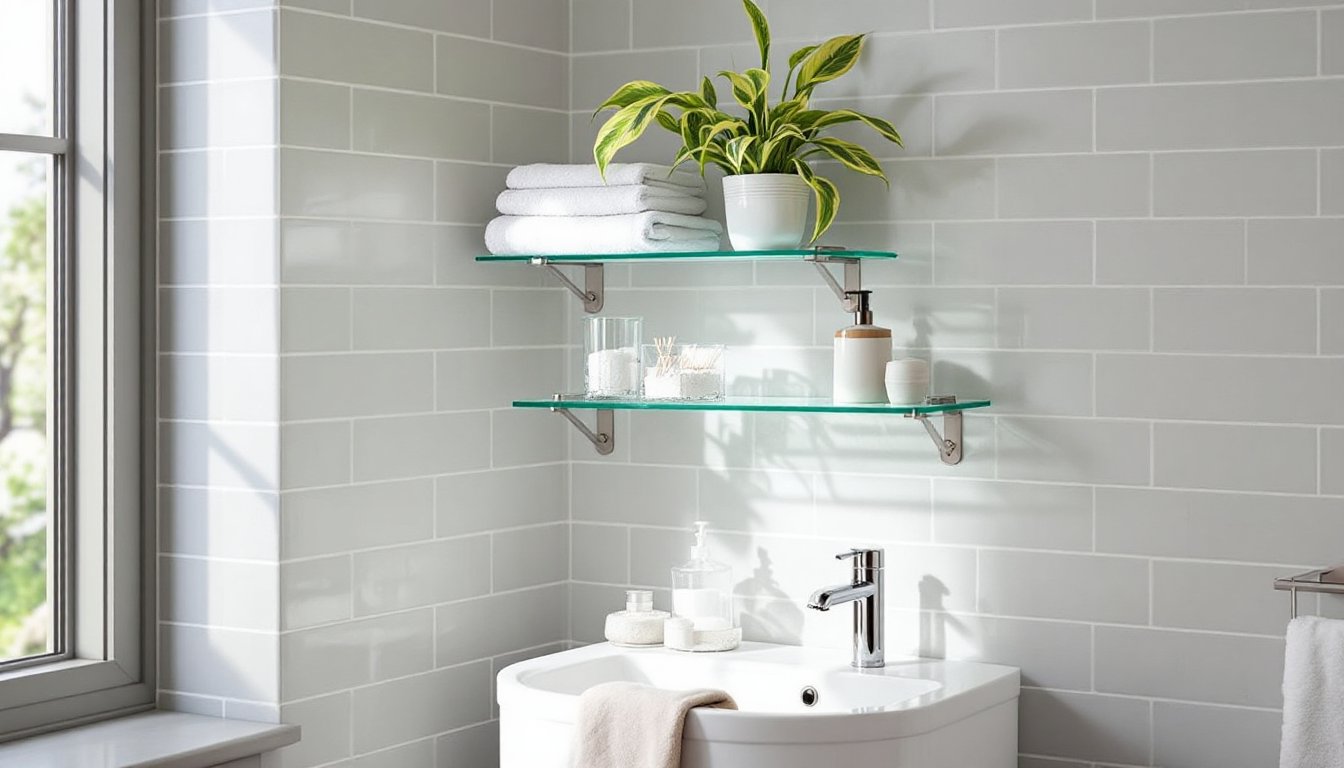
- Tempered glass: sleek look, shows water spots, requires 1/2-inch thickness minimum for stability
Mount brackets into wall studs, not just tile or drywall. A shelf loaded with bottles generates surprising torque. Use stainless steel hardware rated for exterior use, interior screws rust out fast. Apply a heavy bead of 100% silicone caulk (not acrylic latex) around all bracket mounting points to seal against water intrusion.
Many design enthusiasts who follow home organization principles from Real Simple appreciate the clean lines floating shelves bring to modern bathrooms.
DIY Shower Storage Projects You Can Build This Weekend
Hanging Rope Basket Shelf
Materials: One 12-inch diameter wire or wicker basket with drainage holes, 20 feet of marine-grade rope (3/8-inch), two stainless steel eye hooks rated for 50 lbs, silicone caulk.
Drill pilot holes into the ceiling at stud locations (use a stud finder, drywall anchors won’t hold in steam). Screw in eye hooks, seal threads with silicone. Thread rope through basket handle or rim, tie bowline knots, adjust height, secure with double half-hitches. The basket hangs at shoulder level for easy access and can hold 15-20 lbs of product.
Time: 1-2 hours. Cost: $25-35.
Magnetic Spice Rack Conversion
Repurpose magnetic spice tins (the kind that stick to refrigerators) for small items like bobby pins, razors, and hair ties. Mount a 12×4-inch stainless steel plate to the shower wall using waterproof adhesive or small screws into studs. The magnetic tins stick and release easily.
Buy tins at kitchen supply stores or online. Fill with items, label with waterproof vinyl stickers. The steel plate needs to be 18-gauge minimum for sufficient magnetic pull.
Time: 30 minutes. Cost: $20-30.
PVC Pipe Hair Tool Holder
Cut sections of 2-inch or 3-inch PVC pipe to 6-8 inches long using a hacksaw or PVC cutter. Sand cut edges smooth with 120-grit sandpaper. Mount horizontally to the wall using stainless pipe straps and screws into studs, or use construction adhesive rated for wet environments.
These cylinders hold curling irons, straighteners, and brushes upright. Drill 1/4-inch drainage holes in the bottom so water doesn’t pool. Paint with spray paint formulated for plastic if white PVC clashes with your decor.
Time: 1 hour. Cost: $15-20.
Cedar Shower Bench with Integrated Storage
Build a corner bench using cedar 1x4s and 2×4 framing. Cedar naturally resists rot and smells amazing when wet. Frame a triangular or rectangular base 16-20 inches deep, attach slatted seat boards with 1/4-inch gaps for drainage, and add an open shelf 8-10 inches below the seat.
Use only stainless steel or coated deck screws, regular screws corrode and leave rust stains. Apply two coats of water-based polyurethane or teak oil for extra protection. Similar organizational thinking applies when tackling craft supply organization projects that require compartmentalized storage.
This requires intermediate carpentry skills: cutting accurate angles, pre-drilling to prevent splitting, and understanding basic structural support. The bench must support 250+ lbs safely, so attach the back edge securely into wall studs.
Time: 4-6 hours over a weekend. Cost: $60-100 depending on cedar prices.
Safety note: Wear safety glasses when cutting, a dust mask for sanding, and work gloves when handling treated lumber. Power tools (circular saw, drill) should have GFCI protection if working in damp areas.
Conclusion
Shower storage doesn’t have to mean ugly plastic bins or drilling into tile you’ll regret. Whether installing a built-in niche during renovation, tension-mounting a caddy in a rental, or spending a Saturday building cedar shelves, the right approach matches your skill level, budget, and bathroom layout. Start by auditing what you actually use daily, then pick the storage that keeps it accessible, dry, and out of the way.